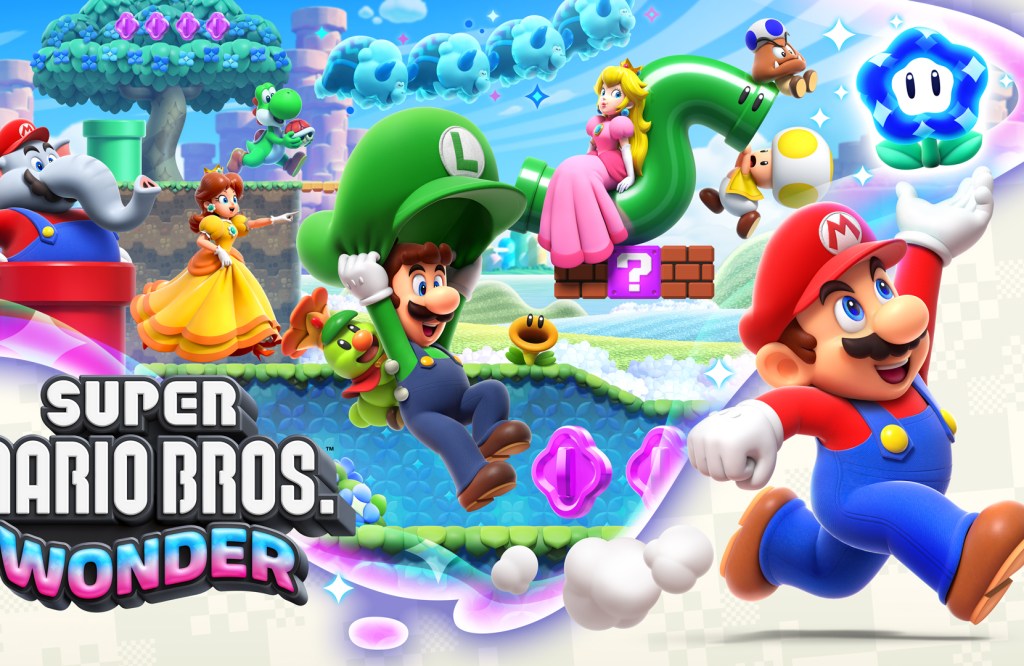
- Release Date: 10/20/2023
- Publisher: Nintendo
- Developer: Nintendo
- Systems: Nintendo Switch
First Time Critiquing Pixels
Welcome, dear reader, to my first game review—an auspicious moment for me, who has played and traversed many virtual worlds but never critiqued them. And what better game to start with than Super Mario Bros. Wonder. A game that isn’t just fun, delightful, weird, and ambitious, but more than anything, wants YOU to enjoy it.
Honestly, I don’t know how Nintendo keeps doing it, but they’ve proven once again why they are the masters of action platformers. The trendsetters, the MVP, the OGs, that others can only imitate enviously, and what a time for a game like this to come out. A video game that sells itself as being a video game. In these questionable times of predatory chump-change monetization with astronomically high production values, Super Mario Bros. Wonder reminds us of the true essence of video games: fun.
Put Your Flowers Away!
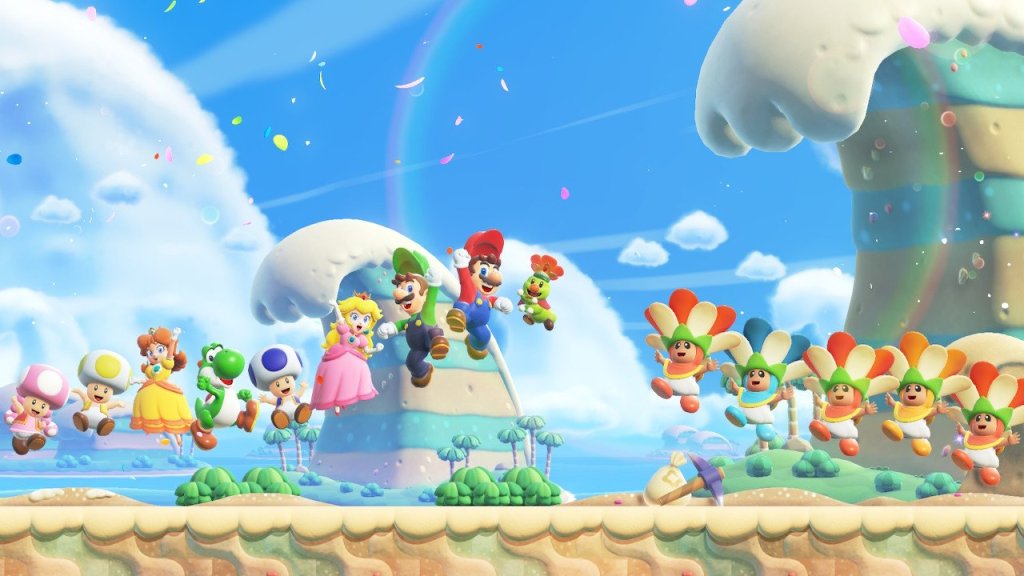
Upon starting a new game, Wonder immediately demonstrates how different it is. First, you choose a character, and we’ve got an entire roster to play with:

Sure, mechanically speaking, it’s not that impressive as you’ve only got three choices, with most characters being alts of each other. The Mario Brothers, the princesses, and the Toads play the same, while the Yoshis have their own movesets, and Nabbit has their own gimmick. The Yoshis nor Nabbit can’t use power-ups, but they make up for it with their beginner-friendly playstyle. Seeing a 2D Mario game using their expanded cast is so rad. The game is saying, “Hey, check out all these characters in our new Mario game. Pick whoever you want; we don’t care, go nuts.” If they added Wario and Waluigi, it would be perfect.
After choosing a character, I came to the tutorial level, which definitely threw me off. The first levels of 2D Mario games are so expertly designed that specified tutorial sections are unnecessary. I feel that tutorial sections, as a whole, are only needed when the game’s mechanics take more finesse to master. In Mario games, you walk, run, jump, and play around with the new powers. You can’t get more complicated than that. And the controls are as sublime as they’ve always been. The characters feel perfectly weighty, not too light, slippery, or grounded. As a charming personal touch, each character now has a unique jumping sound. When combined, they form a ukulele! I’m exaggerating, but you can legitimately edit songs together by just jumping. It’s incredible how something so simple can bring such joyous mirth. With the tutorial also comes a plot synopsis:
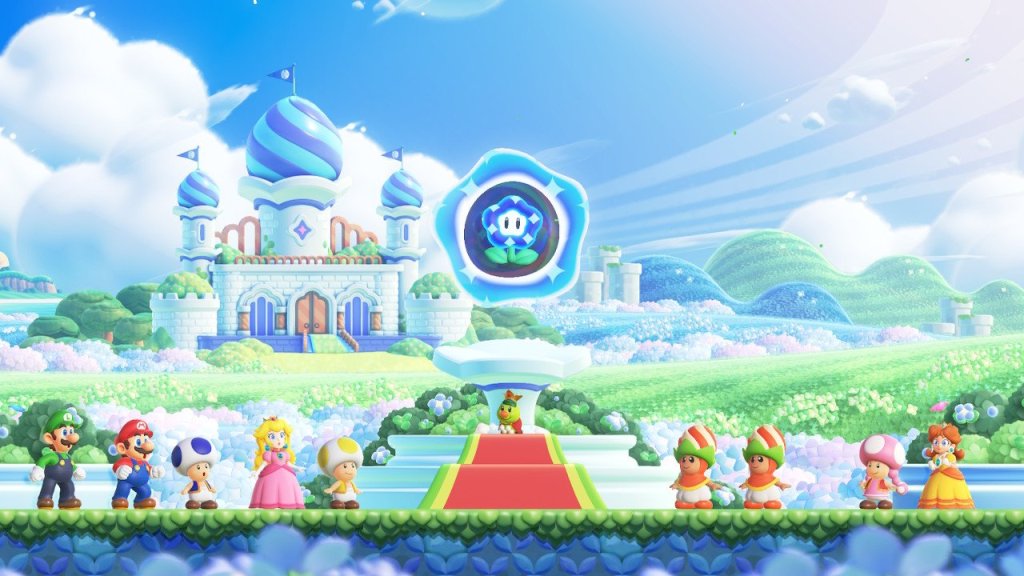
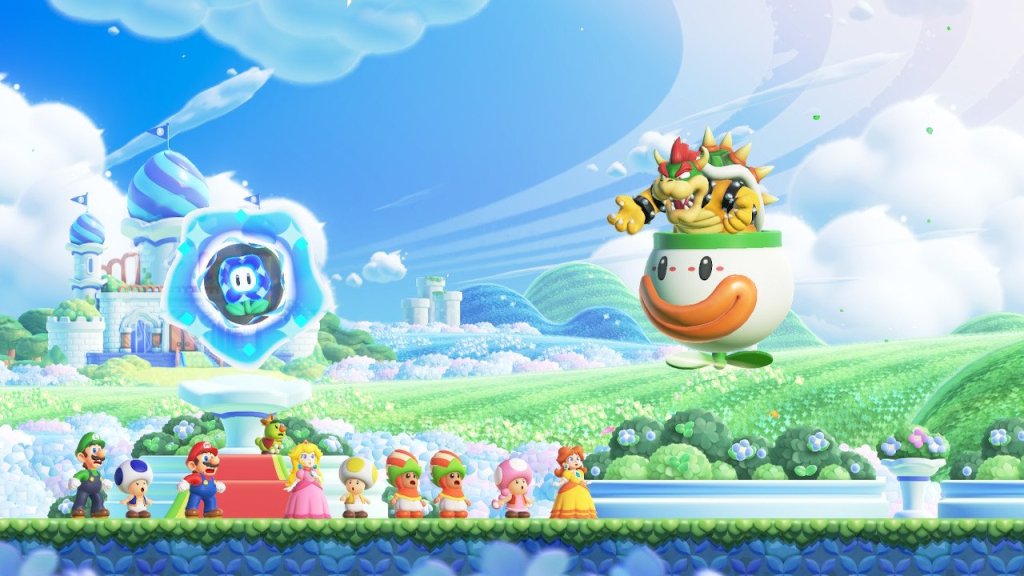
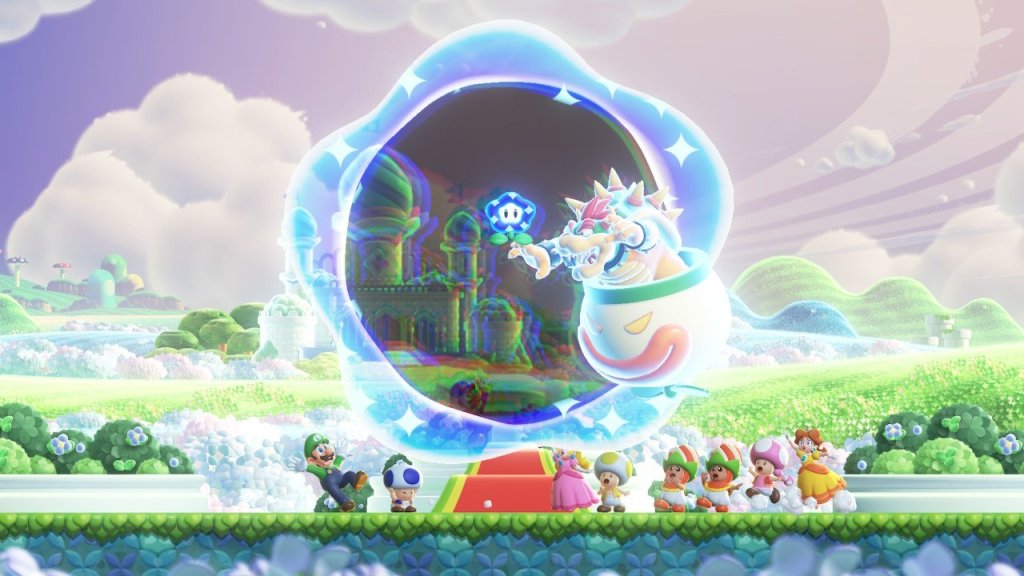
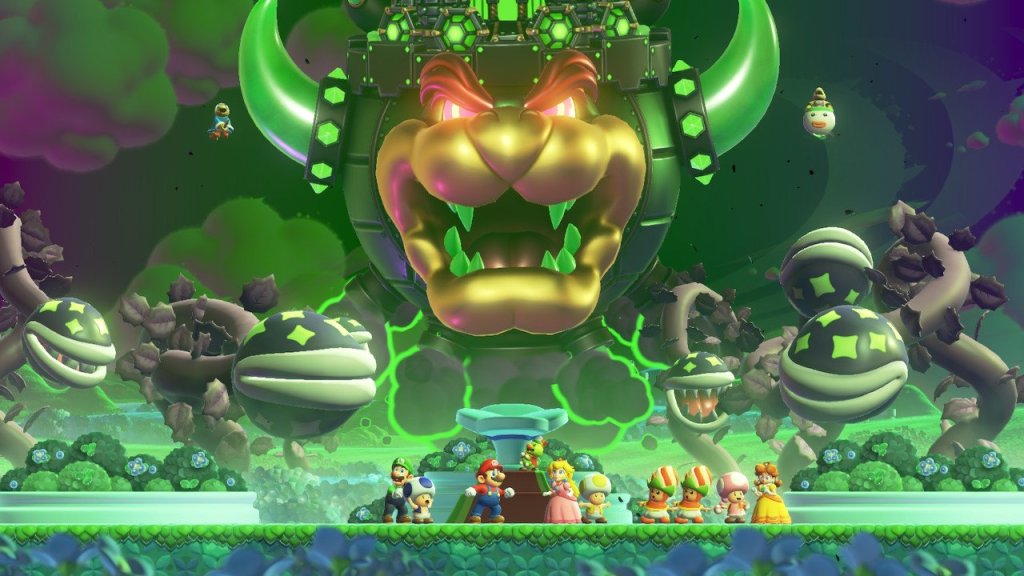
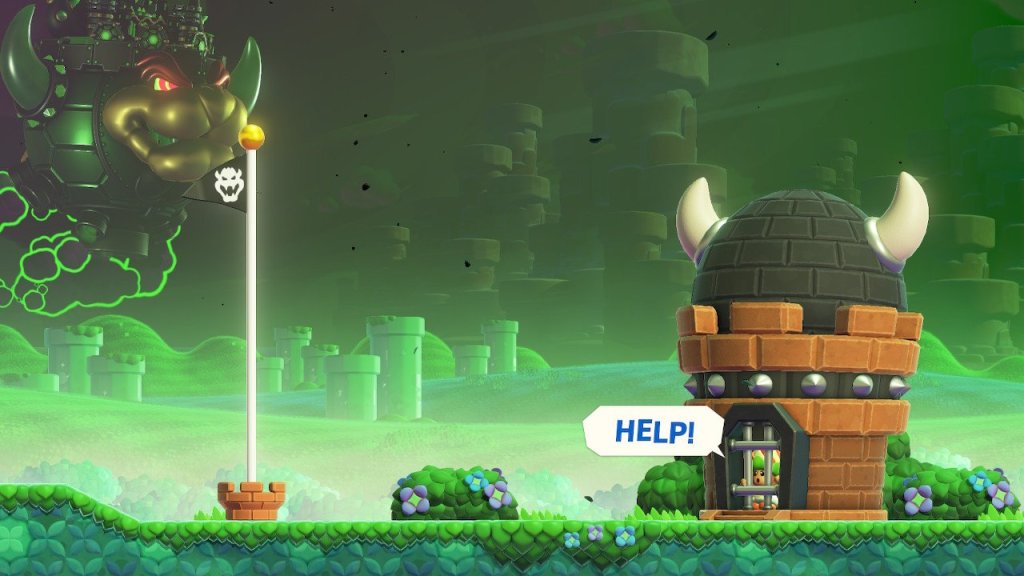
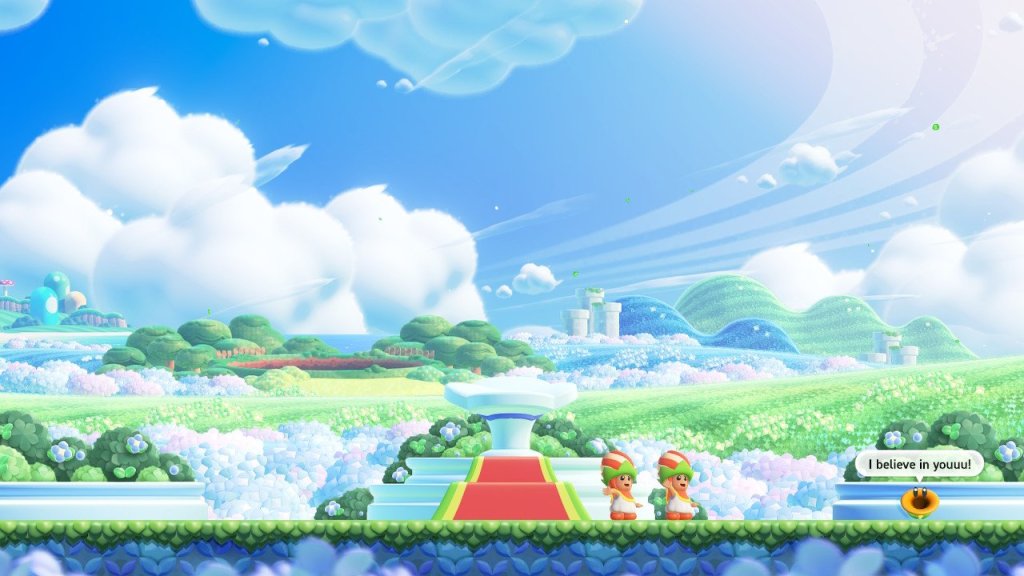
The Mario Brothers and their friends are royally invited to the Flower Kingdom by Prince Florian, when suddenly, Bowser, up to his usual shenanigans, touches the mysterious Wonder Flower and merges with Prince Florian’s castle, becoming Castle Bowser, a giant flying castle. With his new powers, Castle Bowser traps the residents of the Flower Kingdom and distorts the once-serene landscapes into something sinister. It’s up to Mario and his entourage to stop him and his evil plans, whatever they may be.
Personally, I would recommend Prince Florian to not have a reality-warping flower out in the open like that. It’s nothing new, but at least we’re not saving a princess this time. We got two of them on our side, and they’re ready to enact their royal punishments on anything that crosses them. On a side note—welcome, Daisy! It’s so awesome you’re no longer trapped in the Gameboy or side games. I can’t lie; I’ve used her the most. Her happy-go-lucky attitude is a perfect match for this game.
Mario in Wonderland
We have seven worlds—eight, if you count Special World—to explore, six Royal Seeds to collect, and 152 courses to complete. It feels like the Mario games of old, but the new additions and mechanics make it an unforgettable experience that, to me, surpasses everything that came before, albeit with a few caveats to save for later. Like the old games, the first level perfectly demonstrates the ride you’re in for. Beautiful landscapes, expertly placed platforms, a bouncy and catchy soundtrack, magic flowers that spawn coins and reveal secrets, sleeping Goombas, Talking Flowers that give you tips and tell jokes occasionally, and of course, a weird power-up.
Starting with the graphics, LOOK AT THIS GAME!!!
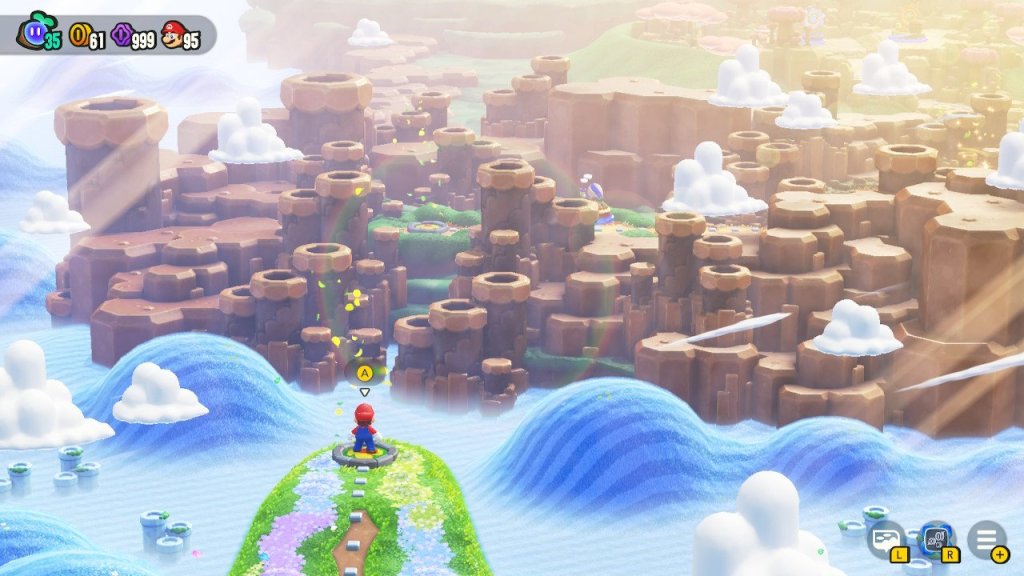
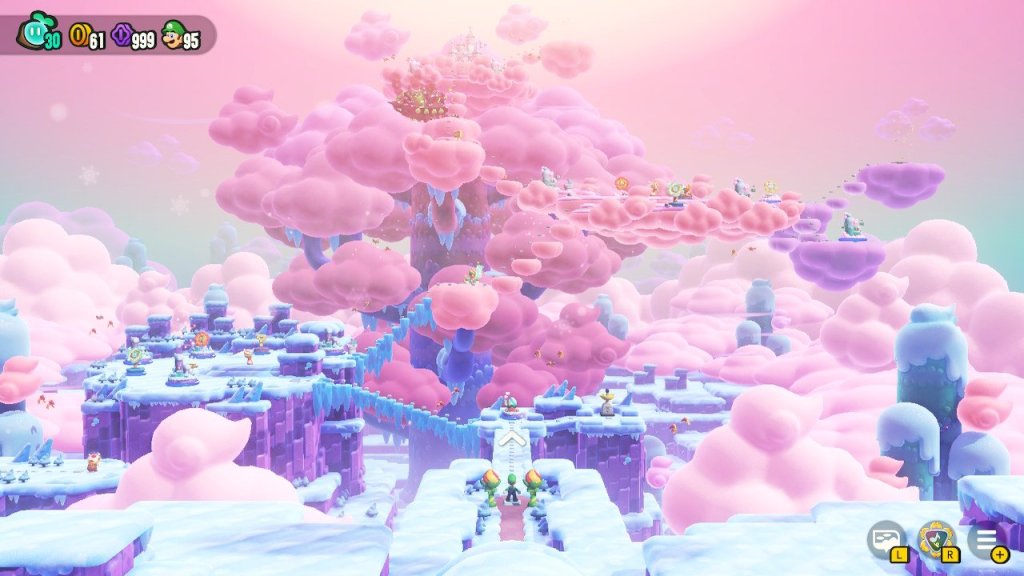
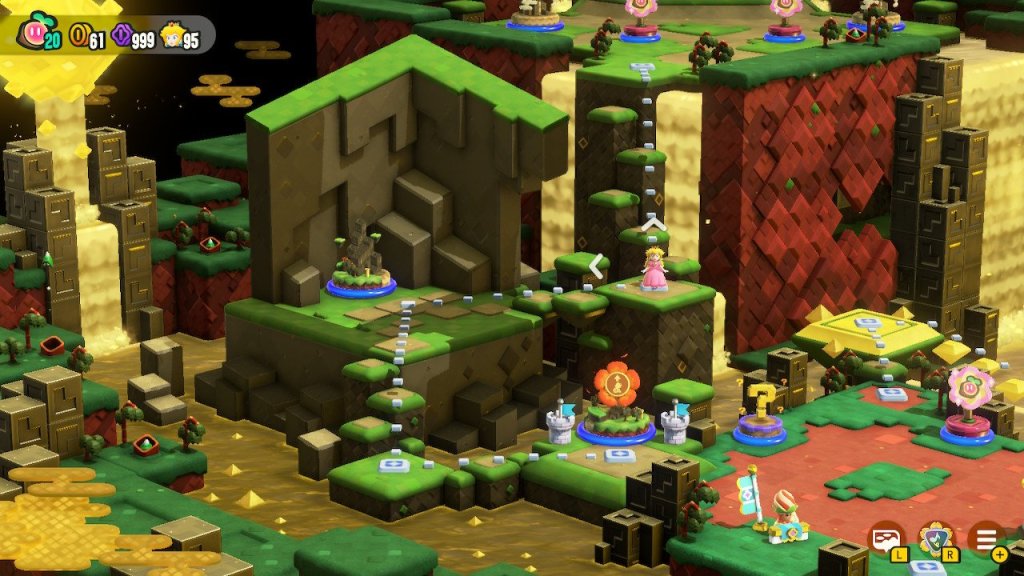
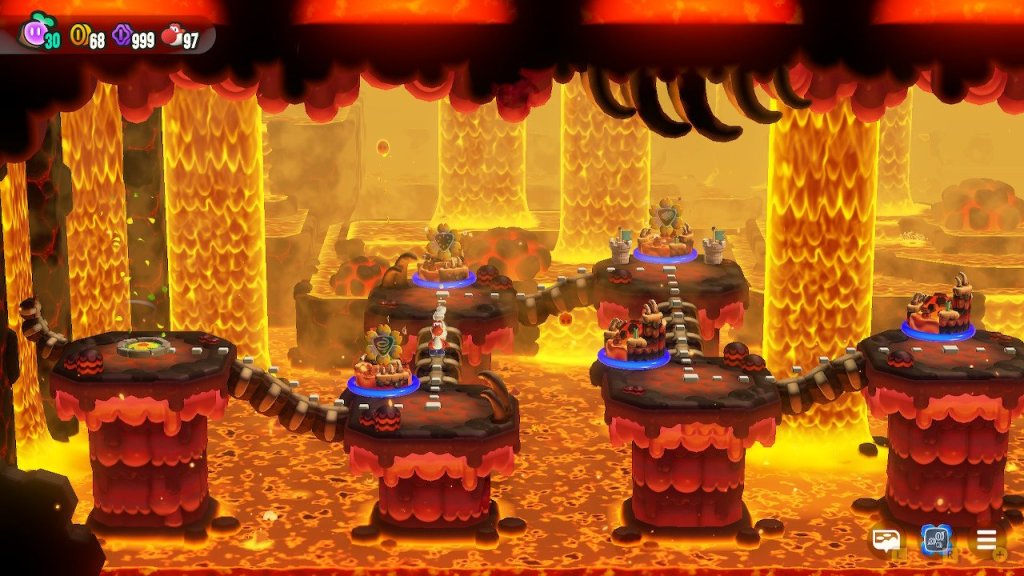
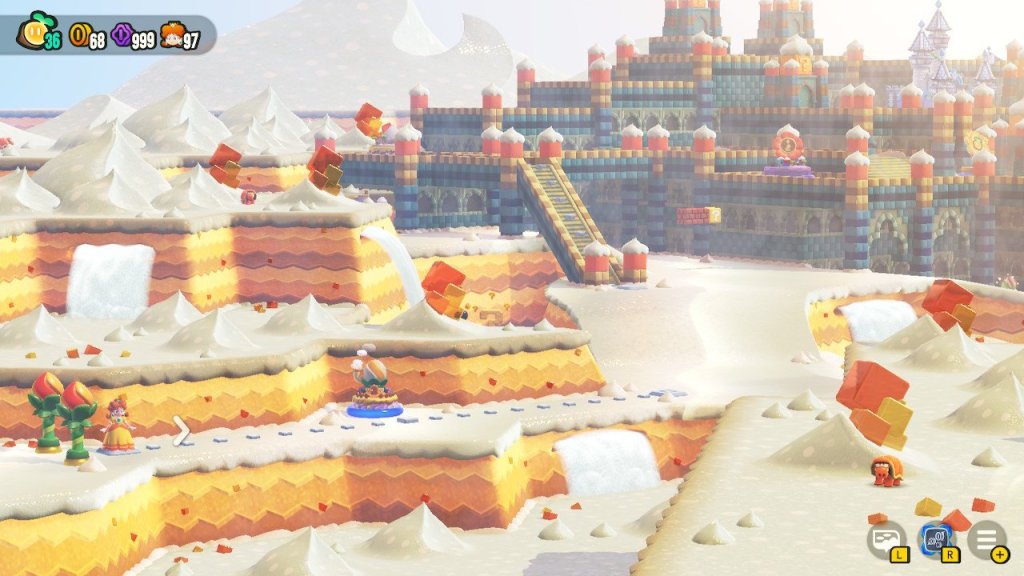
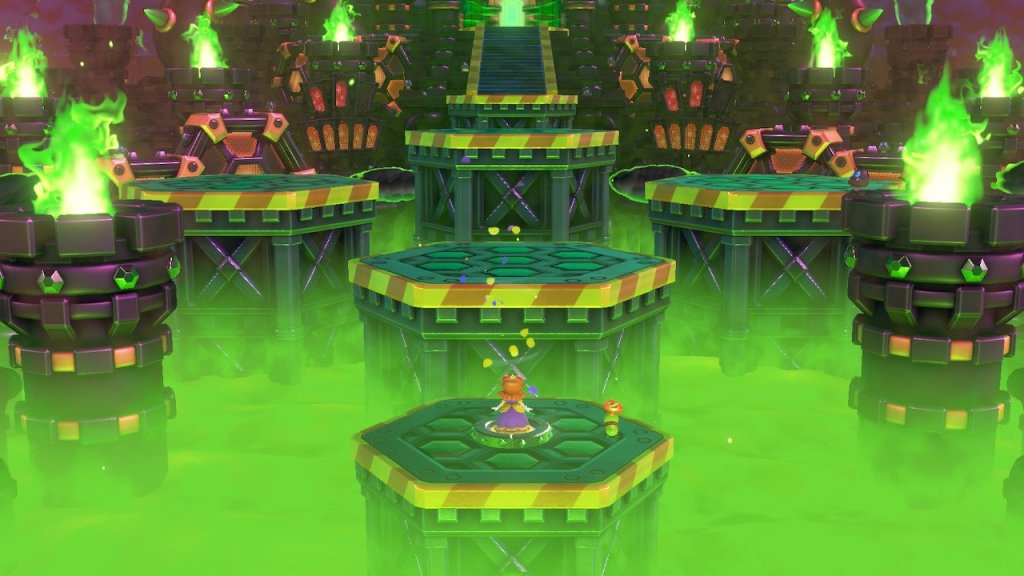
This is THE best-looking 2D Mario game to date and one of the most graphically detailed platformers ever made. The colors, backgrounds, characters, and enemies are so alive and bouncy. It urges you to play around in this wacky world. I think, however, that the little details are better.
Mario games have always been aesthetically charming, but Wonder takes it above and beyond. The game is 2.5D, like the New series, but a brand new engine and some stylistic choices make both dimensions pop. All characters now face 45 degrees toward the camera; this is substantial for several reasons. Angling the models like this allows us to see more of Mario and his friends’ bodily details, animations, and expressions. And oh boy, is this game expressive.
They run and jump with absolute glee, react to being hurt, and strike a pose when they power up. The same applies to the enemies. They’re just chilling, doing their patrols, going left and right, then you get too close, and a fire lights in their eyes. Don’t worry; just throw a fireball at them to instill the fear of god. My personal fave is when the Koopas bump their shells when they collide. It honestly makes me feel bad for SNUFFING the life out of them.
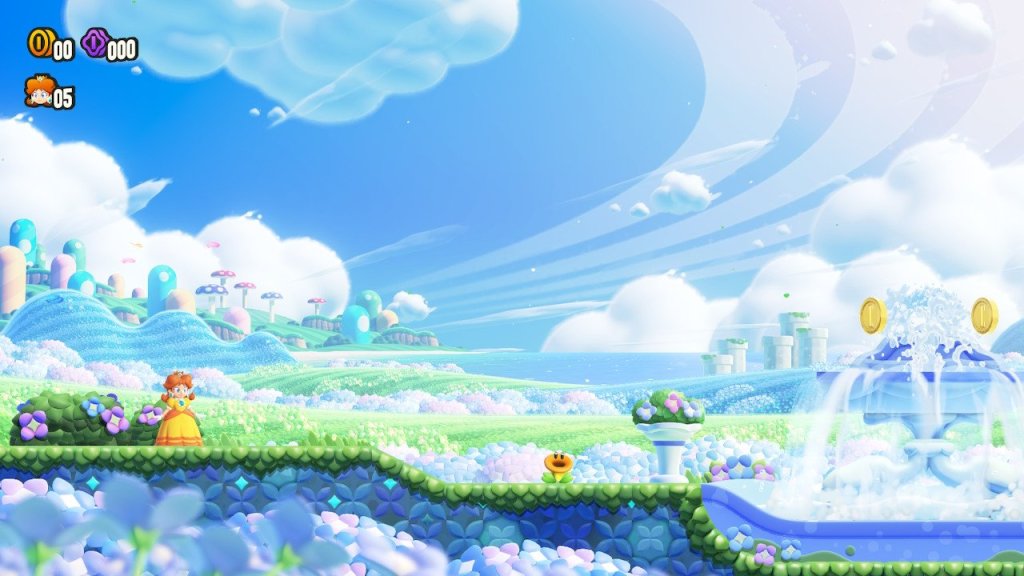
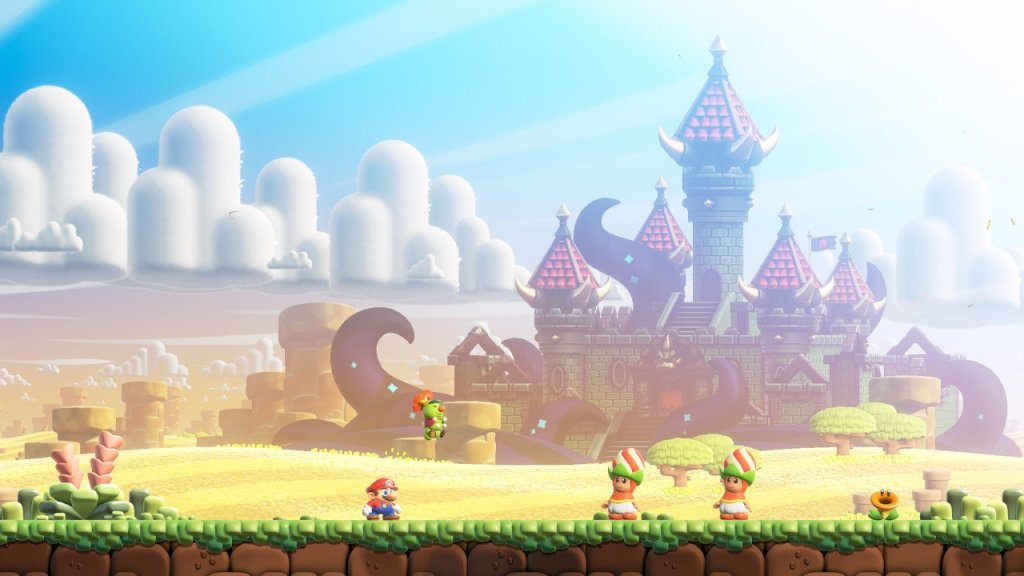
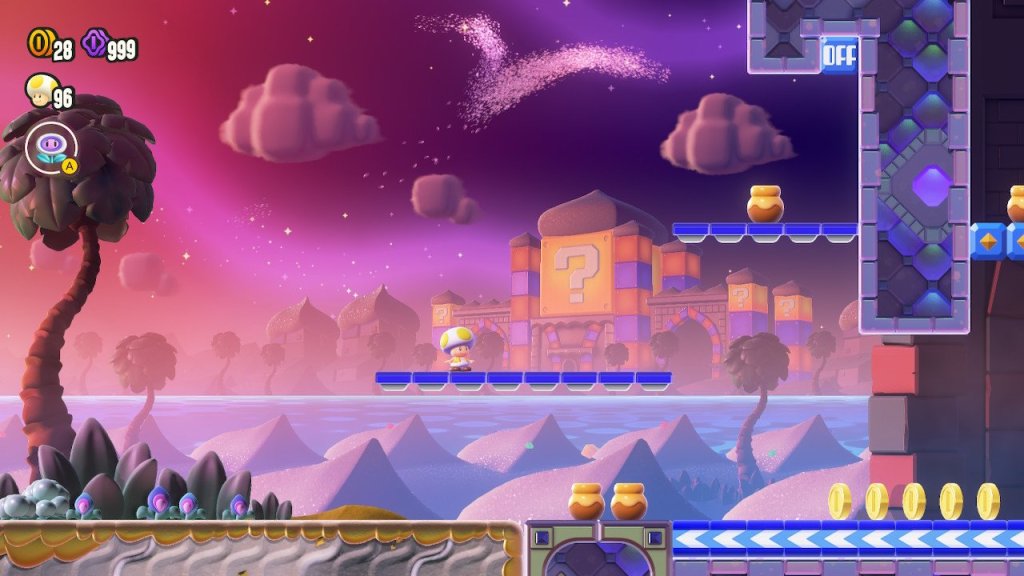
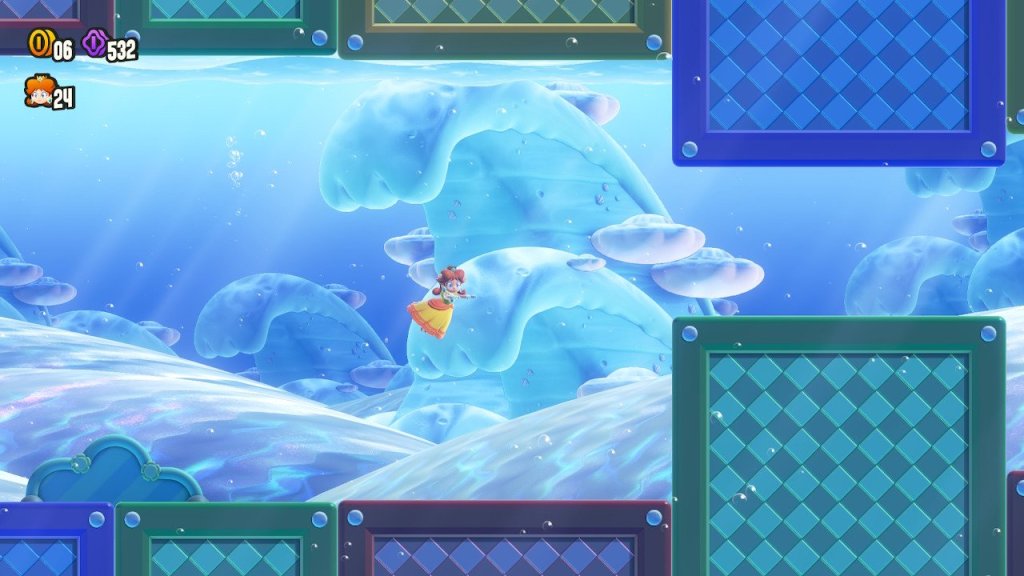
The backgrounds are also exceptionally detailed and insinuate the diversity of Wonder’s worlds. The Flower Kingdom is described as a ‘short hop away from the Mushroom Kingdom,’ in the tutorial level, you can see giant mushrooms disappearing from sight as the characters go further to the right. They’ve always been next to each other; don’t question it. The biomes, on the other hand, break some long-standing traditions.
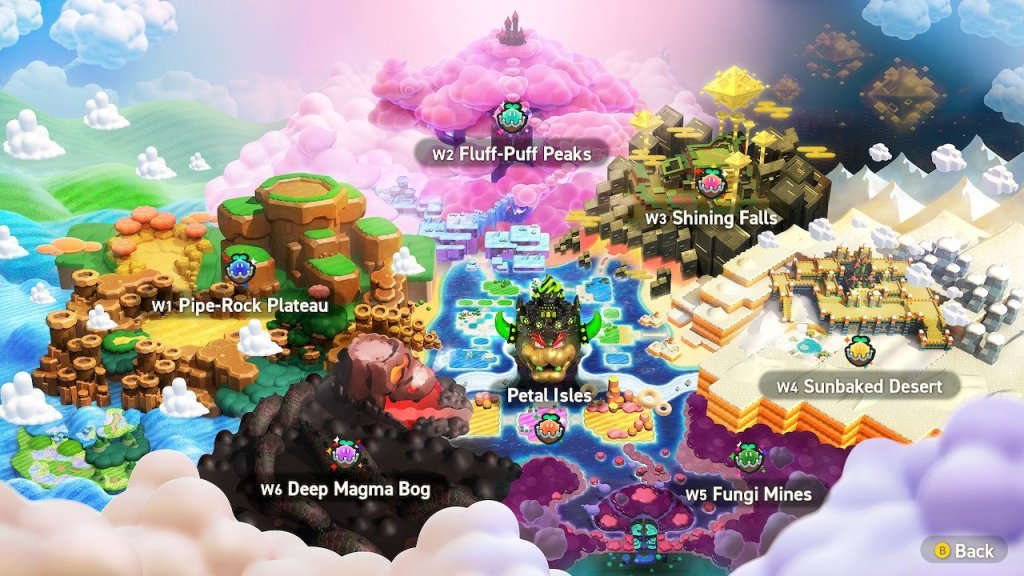
Pipe-Rock Plateau offers your standard grasslands and mountains, but when you reach the Petal Isles, you’ll get a blend of beach and cave levels. Fluff-puff Peaks is a snow-covered mountain that pierces pink clouds. Fungi Mines is a dark, grungy mushroom forest with ruins. Shining Falls introduces a Japanese-inspired polygonal waterfall aesthetic. Sunbaked Desert looks like your average sand world with a giant palace in the center, but the dunes and coloration give the appearance of a cake. And you can’t have a Mario game without a lava world—thankfully, Deep Magma Bog is a lava-covered swamp with odd flora and fauna. The Flower Kingdom is charmingly weird and feels very foreign, and you can’t have weird locales without weird citizens and animals.
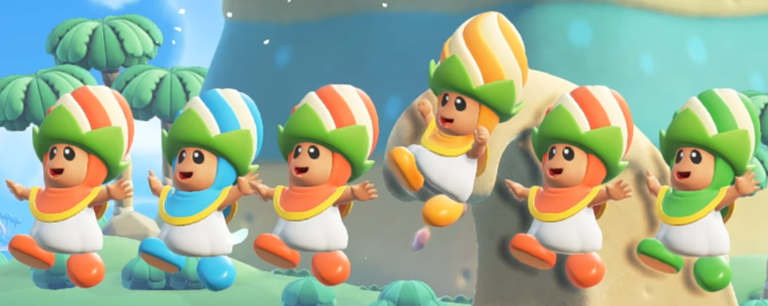
The Poplins are sentient flower people that perfectly contrast the Toads—it’s up to us to help, save, and pay their salaries with Flower Coins(more on those later). There are chunky, bouncy, hippo-like creatures called Hoppos. Gluttonous platypi things called Maw-maws will swallow you whole. Invasive roller-skating Rolla Koopas. And so much more that for the sake of not cluttering the article, I’ll just link them here. Enemy variety is through the roof—you’re bound to see something new on each level, but now we return to the true stars of the Flower Kingdom, the Talking Flowers.
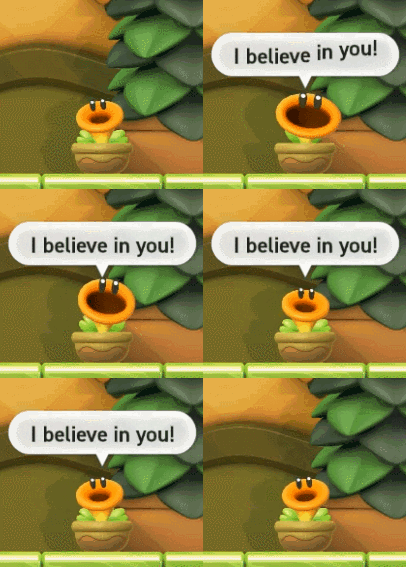
Now, I can understand why most adult players playing a children’s game want to mute them, but… how could you? Wonder’s doing a lot to keep you engaged, from the platforming to the enemies; the talking flowers are its intrusive thoughts given physical form. They add so much charm to the experience that shutting them up makes the game feel a little less lively. You can even change their language; how can anyone hate that? They make random comments about the level, break the fourth wall to provide hints, and motivate you to be a better player. Dedicated tutorial characters can be a hit or miss, but the flowers don’t tell you how to play since the gameplay practically speaks for itself; they simply encourage you to do certain things, and it’s up to you to figure it out. They’re not unnecessary, heck, they’ve saved my life one time… they saved yours too, don’t deny it.
What’s funny to me is that they only exist because the devs couldn’t implement a live commentary feature. Yeah, imagine the game speaking to you constantly like some otherworldly force. One of the options for commentary was that of a tsundere, which would have been hilarious. Something about the game insulting you for being a scrub really speaks to me…
Pin the Badge on the Elephant!
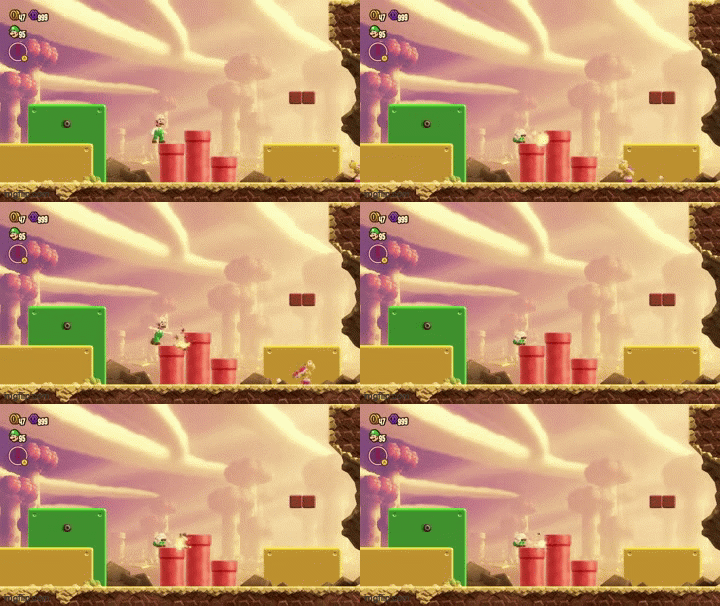
Moving on to power-ups, we’ve got six to play with, which feels like a downgrade from what the series has brought before, but don’t worry, there’s much more to play. We’ve got the classic staple power-ups: the Super Mushroom, Fire Flower, and Super Star. The second received the cutest little buff. You can now throw fireballs while crouching, which is as adorable as it looks.
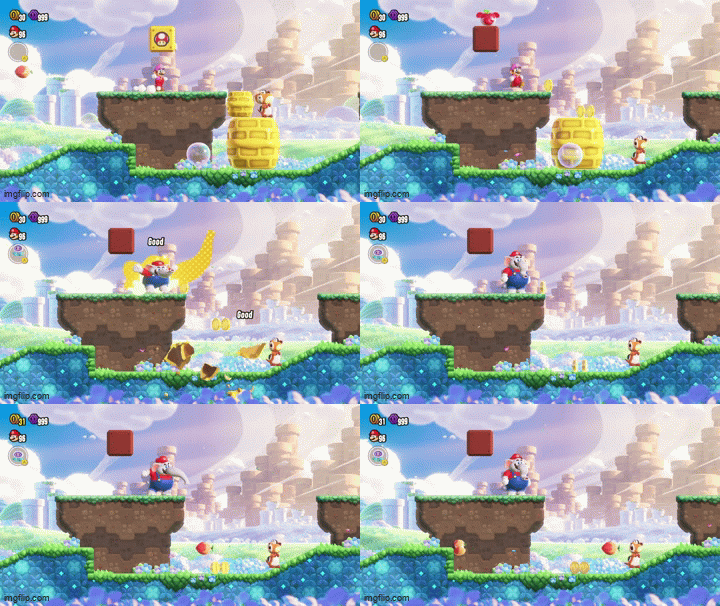
As for the three new toys, we got the game’s signature power-up, the memeable Elephant Fruit, which turns you into an elephant. Aside from adding extra brass to the music, you can swing your trunk to attack enemies and destroy blocks, spray water on plants, run across two-space gaps, and pick up stuff too big for the basic Super Form. Memes aside… it’s mid. My issue with it is that it doesn’t really enhance platforming. Compare this to the verticality and air time the Propeller Suit and Super Acorn provided. Also, the increase in size applies to your hurtbox. If hazards are littered everywhere, you may wanna lose the trunk.
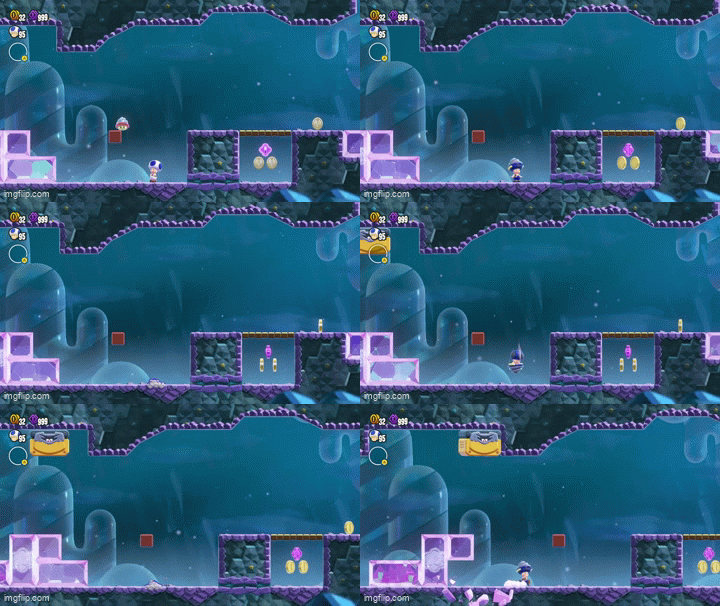
Next is the Drill Mushroom, the second-best power-up. With a giant drill helmet spinning on your cranium, you can dig through the level’s terrain to avoid hazards and access secret areas. It also takes a few notes from the Spiny Shell helmet with its protection against overhead attacks. While you can drill through the ceiling, you can’t do so with walls, making it somewhat sub-optimal for vertical levels. Overall, it’s a fun ability with great utility.
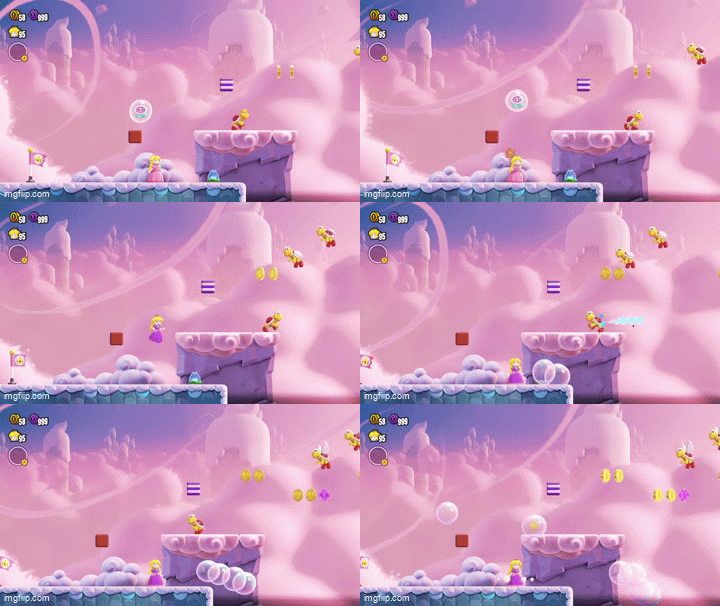
Saving the best for last, we got the Bubble Flower. This has to be one of the best Mario power-ups ever made. Not only can the bubbles turn usually unkillable enemies into money, but they enhance platforming exponentially. You can bounce on them, and they even go through walls. You can pull off some crazy clutch maneuvers, and with the verticality they provide, you can reach all sorts of areas. Yeah, the Bubble Flower is top tier, but the power-ups don’t just end there, oh no, because we got badges.
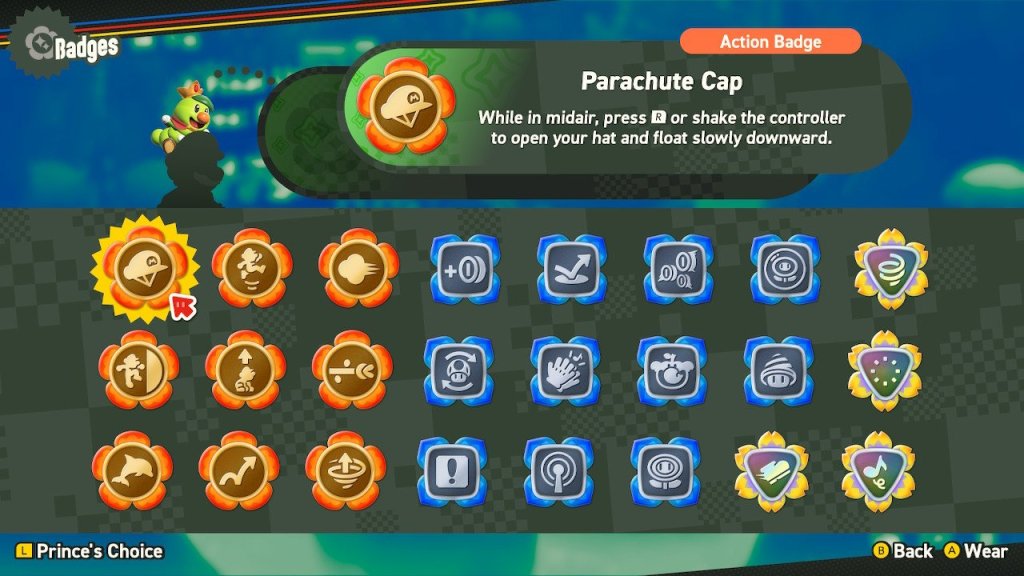
There are 27 to collect, with Action Badges being the ones you’ll likely use the most. Across the Flower Kingdom are “Badge Challenge” levels that serve as tutorials for the specified power. What do they do? Anything you want. Want to use your hat as a parachute? Here you go! Want to jump higher? Put on that badge! Want to swim faster even though there are only, like, five water levels in the entire game? Uh… sure, why not? You can only equip one at a time, and they allow you to experience the levels in various ways. Admittedly, some badges are better than others, and if I had to rank them, it would be like this:
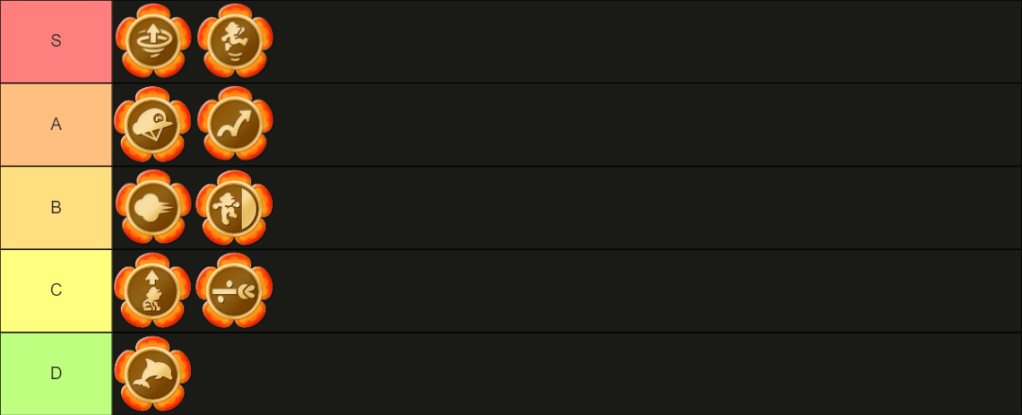
Despite the extra maneuverability, their implementation could be better. Most abilities are mapped to the R button—the same button used to spin jump. This isn’t an issue with most badge powers, but it really comes into question when using the “Grappling Vine.” There are instances where you want to spin-jump in the air to stall your momentum, but—oops! The vine comes out instead and causes you to die. They could have improved this by mapping badge powers to the L button since it does nothing in the levels, but I digress. The other badge categories are… alright.
Boost Badges are passive and can be purchased from the game’s many item shops using the Flower Coins you’ve collected. They’re great for beginners and help get coins and find secrets.
Finally, it’s the Expert Badges. These are also passive but are designed to aggravate you and make levels harder. If you want the hardest possible challenge the game can provide, equip the Invisibility badge and have fun making those jumps. The “Sound Off?” is the one I hate most. What does it do? It makes stupid noises, and that’s it. Totally worth the 50+ lives I spent trying to get it. I have my personal gripes with the badges, but in the end, they all have their uses and make up for the fact that there aren’t as many actual power-ups compared to previous entries. Always remember, though, this is 2D Mario.
You can play the game from start to finish without using a single badge. It’s unlike the 3D Marios, where some levels are meticulously made with a specific power-up in mind(looking at you, Spring Mushroom). Being good at 2D Mario is determined by your skill, and Wonder, despite its new fancy gimmicks, is no different. The levels are so polished and superb that power-ups are complimentary. That said, some of the new ideas that Wonder introduces tend to feel like padding, and they’re used so sparingly that they reek of experimentation.
The “Break Time!” levels are so short and uninteresting that I question if they were leftover from the testing phase. I like what the “Search Party” levels are going for, but scattering a bunch of hidden blocks everywhere doesn’t make for good or fun puzzles. The “KO Arena” levels are decent, but combat isn’t the focus of 2D Mario. I love the “Wiggler Races,” where the objective is to go fast, but there are only three of them in the entire game. With all this variety, I can’t say the devs aren’t trying, but their ideas do leave a lot to be desired. Just like the boss fights.
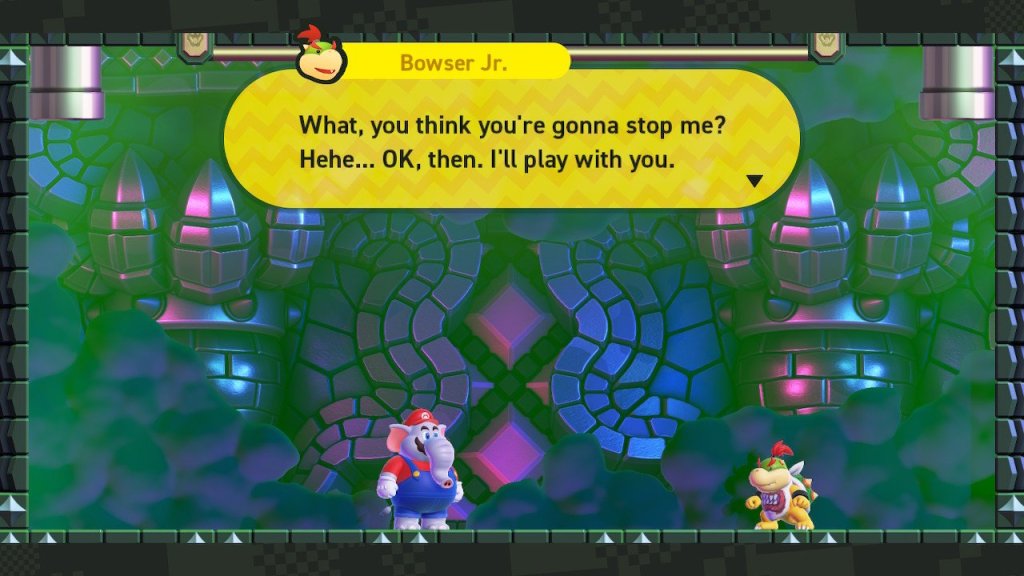
And by boss fights, I mean ‘boss fight,’ as in singular. Bowser Jr. here talks a big game, but we must remind him of his eternal destiny as a pushover, four times precisely. It is said somewhere(don’t quote me)that boss fights are an extension of the gameplay—A chance for the player to test their skills against a mighty opponent and utilize everything they’ve learned and acquired thus far. Wonder does make one small innovation to the Mario formula. In his encounters, Bowser Jr. will activate a Wonder gimmick to help him out, and instead of the traditional three hits, he goes down in… four hits!
Yeah…
I get it; nobody plays 2D Mario for the boss battles. Still, with all the innovation at play, I expected more.
With all of the mechanics above in tow, however, Mario platforming has never felt more fun, involved, and unique—poorly implemented ideas aside.
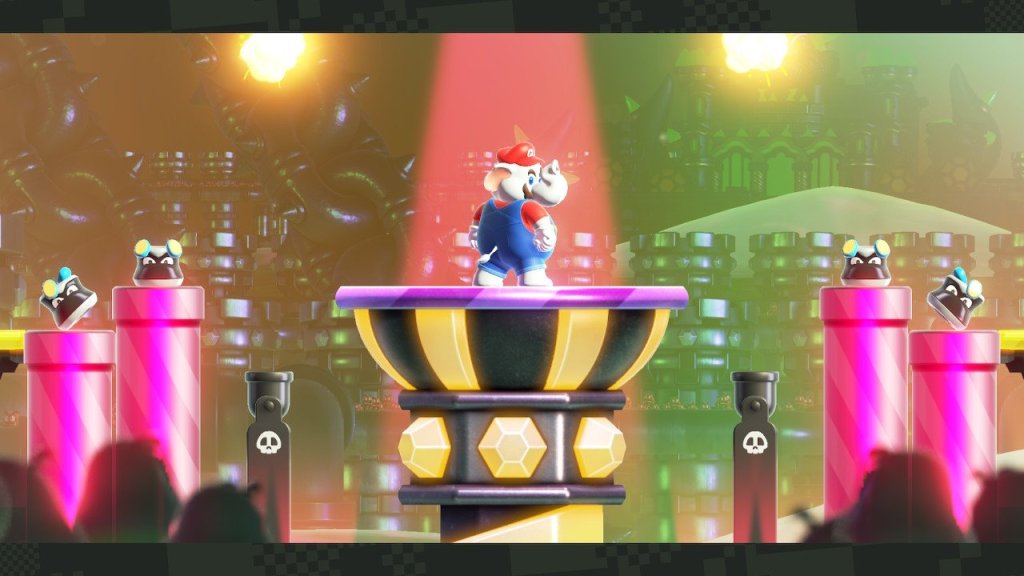
This is all wonderfully accompanied by a perfectly jovial soundtrack and sound design. The sound design alone gives Wonder an identity as unique as its predecessors. I already mentioned the jumping noises and the elephant form’s extra brass, but I personally enjoy how the music picks up in pace depending on your speed. When ground pounding, a snare drum will rev up and finish with a cymbal. The game is inherently rhythmic; some courses were even made to insinuate this characteristic to its limit. And with no timer looming over your head, you can take all the time you need to enjoy the game’s sound. Oh yeah, we should talk about that.
Time is but a Construct
This was the first thing I noticed when the game was unveiled. It wouldn’t be the first time 2D Mario has done this; Super Mario Bros 2 and Super Mario World 2: Yoshi’s Island discarded their timers. In many ways, Wonder’s levels are similar in structure to those games. Without a timer, levels must be more intricate and varied by default. It’s no longer about reaching the goal; Wonder wants you to explore, find every secret, get the collectibles, and take your time. That’s not to say it’s completely gone; instead, it is used sparingly.
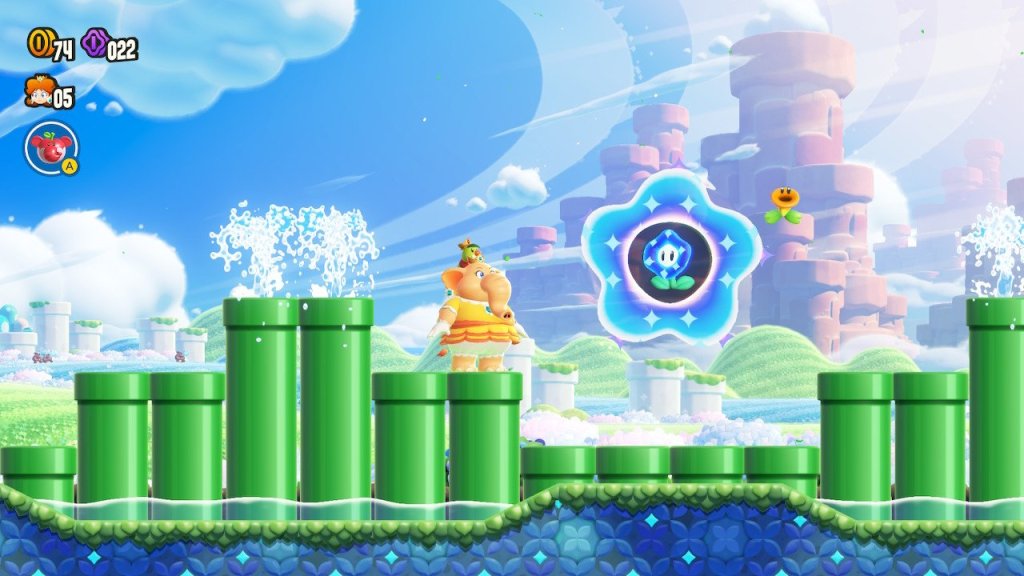
I briefly mentioned the Wonder Flower and how it turned Bowser into a flying castle, but its reality-warping power plays an equally prominent role in gameplay. You can find one on almost every level, touch it, and a “Wonder Effect” occurs. These effects can range from making the pipes, backgrounds, coins, and other inanimate objects come to life, making enemies dance and sing opera, launching you into space, and transforming you into a different species. There are a ton of these events, and some of them use a timer. To stop the weirdness, you must get the Wonder Seed and, uh… “comedown” to reality. While these moments are short, they add an extra touch of silliness and fun. They can even lead to secret exits and change the structure of the level. If the series omits the timer entirely from here on out, then I would like to see a time trial mode or something similar, where players are incentivized to make full use of the game’s mechanics.
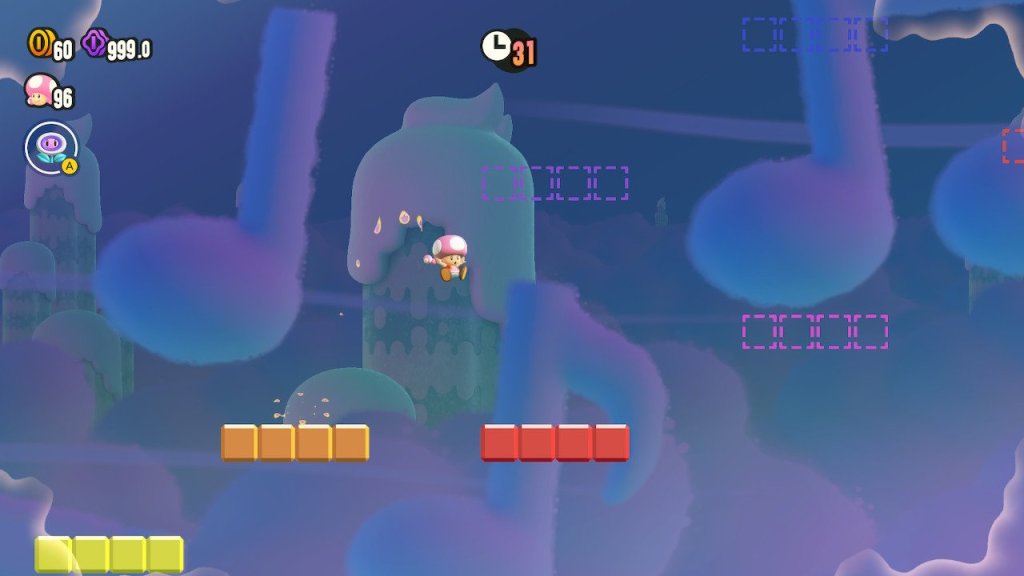
Back to Wonder Seeds, though, you don’t have to collect all of them, as the game gives you enough to complete it, but they are necessary for unlocking levels. They also do not stack, for each world has its own seeds to collect, and this is where we find one major caveat.
I… don’t get why, since Super Mario Odyssey allowed you to collect as many Power Moons as you wanted on a single world and stack them so you can beeline straight to the endgame. All the game is doing is gatekeeping your progression. No, you can’t just find a special pipe like you could in other 2D Mario games to skip worlds or fight Bowser; you gotta go to all the worlds, get all six Royal Seeds first, and THEN you can beat the game.
Why?
You don’t need to beat every level to unlock the castle stages, but the secret shortcuts reward you for playing against the game’s rules and thinking outside the box. Remember that everything in 2D Mario is determined by your skill, and no shortcuts somewhat go against that. There’s also no good incentive for collecting every seed in each world. All you are rewarded with are Flower Coins, which you can easily find in levels, defeating the purpose of even going the extra mile. You’ll always have enough to give away and buy standees that are only worthwhile in online play. Also, this game has online play, which I… did not touch.
I like my single-player…
With that said, however, I have no other bad things to say about this game. Everything else is magnifique!
The Wonderful Future
Seriously, almost all of Wonder’s flaws result from experimentation. While there are some rough edges, the package as a whole more than makes up for it. It’s the type of AAA game that shouldn’t exist in today’s gaming landscape. Pure joy from beginning to end, with no microtransactions, season passes, yadda-yadda-yadda. It’s a 100% video game and an excellent stepping stone for the series’ future. 2D Mario has never been this expressive with its animations and graphics, this musically charming with the sound design, and this open-minded with its gameplay. It’s like Wonder took bits and pieces from the wide world of action platformers and adapted them into its formula. The next generation of 2D Mario is here. For the sequel, I hope to see more concept ideas that didn’t make it, like the 23 other badges they conceptualized. Please let one of those be a ‘God Mode’ badge that equips all abilities at once. Let me dream…
 Embrace the Pixels