“Gotta eat your daily dosage of pixels. They may feel a bit sharp on the tongue, but food is food.”
Ignorance is Not Bliss
In science fiction, it’s easy to sell someone the concept of a digital world far from our everyday reality. A world where anything is possible, with the only limitations being what the technology can provide. But there are aspects of it that make one question, ponder, and overthink. Take the scene in The Matrix of Smith and Cypher eating at a restaurant. Cypher makes a deal with the virtual devil and gazes at his equally virtual steak with such an inquisitive glutton that, when he takes a bite, it’s like he found love, purpose, and the meaning of life all at once. While still purely science fiction, gustatory tech brings us closer to digitizing taste.
Knowing this, I must ask: Will we ever eat Sheldon J. Plankton’s holographic meatloaf and savor its “pixely” flavor?

Probably not, but advancements in taste electronics demonstrate how easy it is to trick ourselves into thinking we’re tasting a big scrumptious bowl of pixels disguised as a juicy steak.
Enriching the Virtual Palette
Scent and taste are complimentary; when combined, they “create” flavor, which is then processed by our brains as electrical signals. Taste is the weakest of our senses, the most susceptible to deterioration, and incomplete without scent, but in some ways, it is more physical and carnal than the rest. We as humans are unique because we taste for reasons outside of subsistence or survival. We’ve turned cooking into an art and the natural act of eating into an experience. Say the serendipity of eating delicious food or the waves of nostalgia when we consume our favorite childhood dish. And don’t even get me started on the more ‘pruient’ side. Life is incomplete without tasting, hence why I fear and despise catching a cold. As XR tech advances, so will our virtual palettes. It hasn’t even been THAT long, either.
In 2013, the founder of SHIFT Inc., Masaru Tange, developed the Scentee Balloon air diffuser for smartphones as a side project.
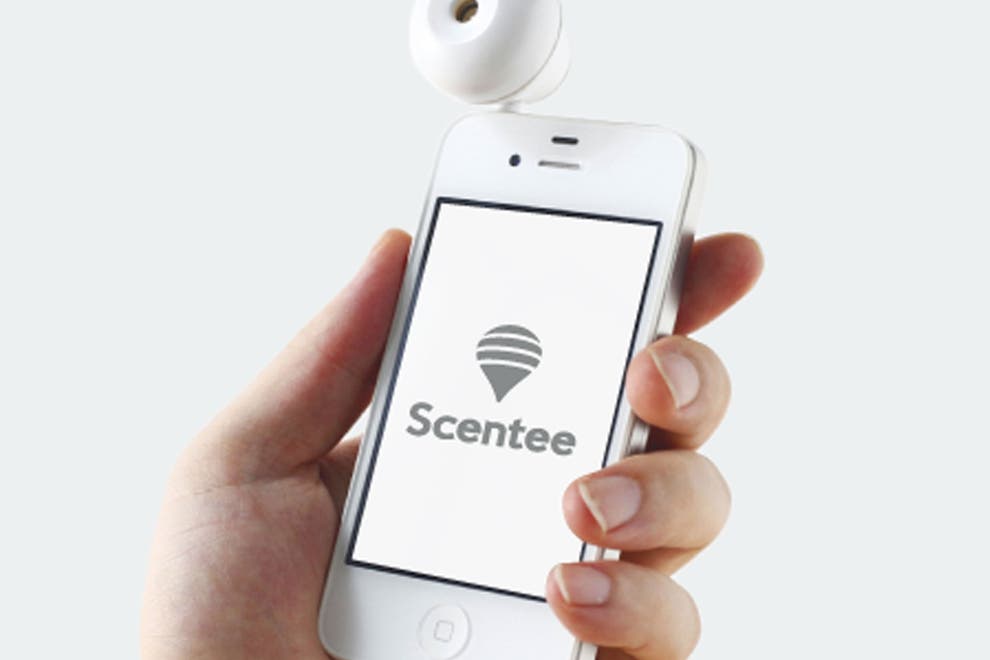
By inserting the device into the phone’s headphone jack and using its proprietary app, the user selects the scent they wish to smell, and the device delivers. Curiously, one of the smells it advertised was that of “Hana Yakiniku,” or Japanese BBQ. When you don’t have the money, trick the brain into thinking you’re eating something other than plain rice.

If you look at their now-dead website, you won’t find anything that sells the illusion of juicy steak, but you will find your standard fruits like oranges and strawberries… also, RIP headphone jacks. Nowadays, air diffusers are controlled wirelessly via the smartphone. It makes me think that mobile gaming would be much different if more concepts like these were further explored, refined, etc. Scent is undoubtedly an essential part of the equation when coding the illusion. Regardless, without something physically there to shove into your mouth, all you have is an over-glorified perfume dispenser. That’s not where 2013 ends, though, cause we also got the first taste interface.
In this 2012 video posted by Professor Nimesha Ranasinghe of the University of Maine, we have a prototype of the Digital Lollipop. A device that can simulate six flavors: Salty, Bitter, Spicy, Sour, and Umami/Savory.
An electrode attached to the end of the wire conducts electricity and heat to create a simple illusion. When it touches our tongues, our brains recognize the frequency as flavor. Honestly, I find it amazing that this tech is so young, and the applications are universal, from medicine to entertainment and, to a lesser extent, porn. The fact that the setup is so rudimentary also means that anyone can make their own interface with a bit of ingenuity. But the world of taste and flavor is more complex than just the five labels—we need to go further and replicate specific foods, like… sushi.
Fast forward to 2020, from Singapore to Japan, we got the Norimaki Synthesizer. Developed by Professor Homei Miyashita of Meiji University, this sushi roll-looking thing uses an “ion electrophoresis” process to stimulate the tongue. To keep it simple, it uses five electrolyte gels charged by electric currents to produce the illusion of flavor. The electricity travels through our tongues and activates the five flavors.
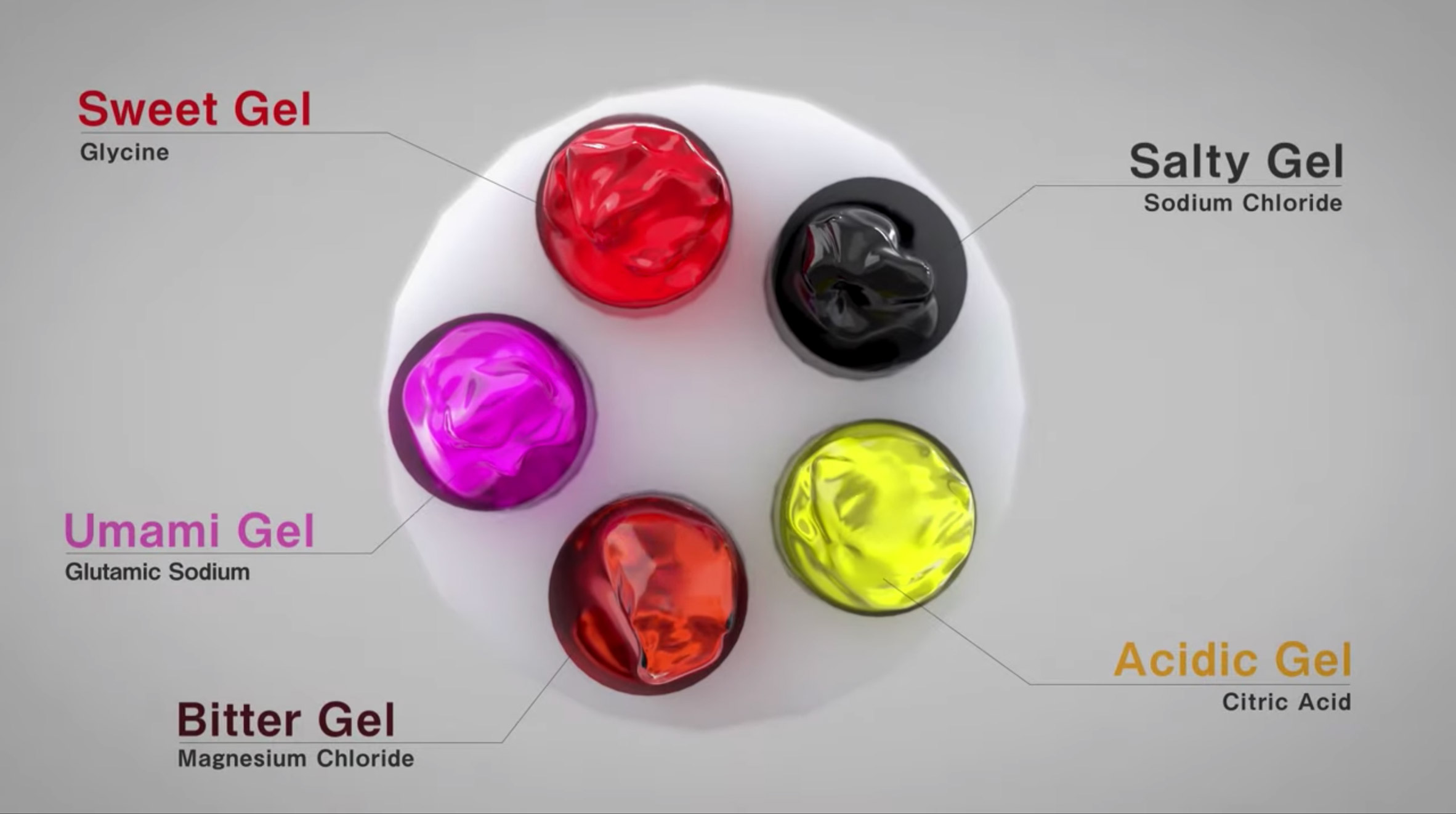
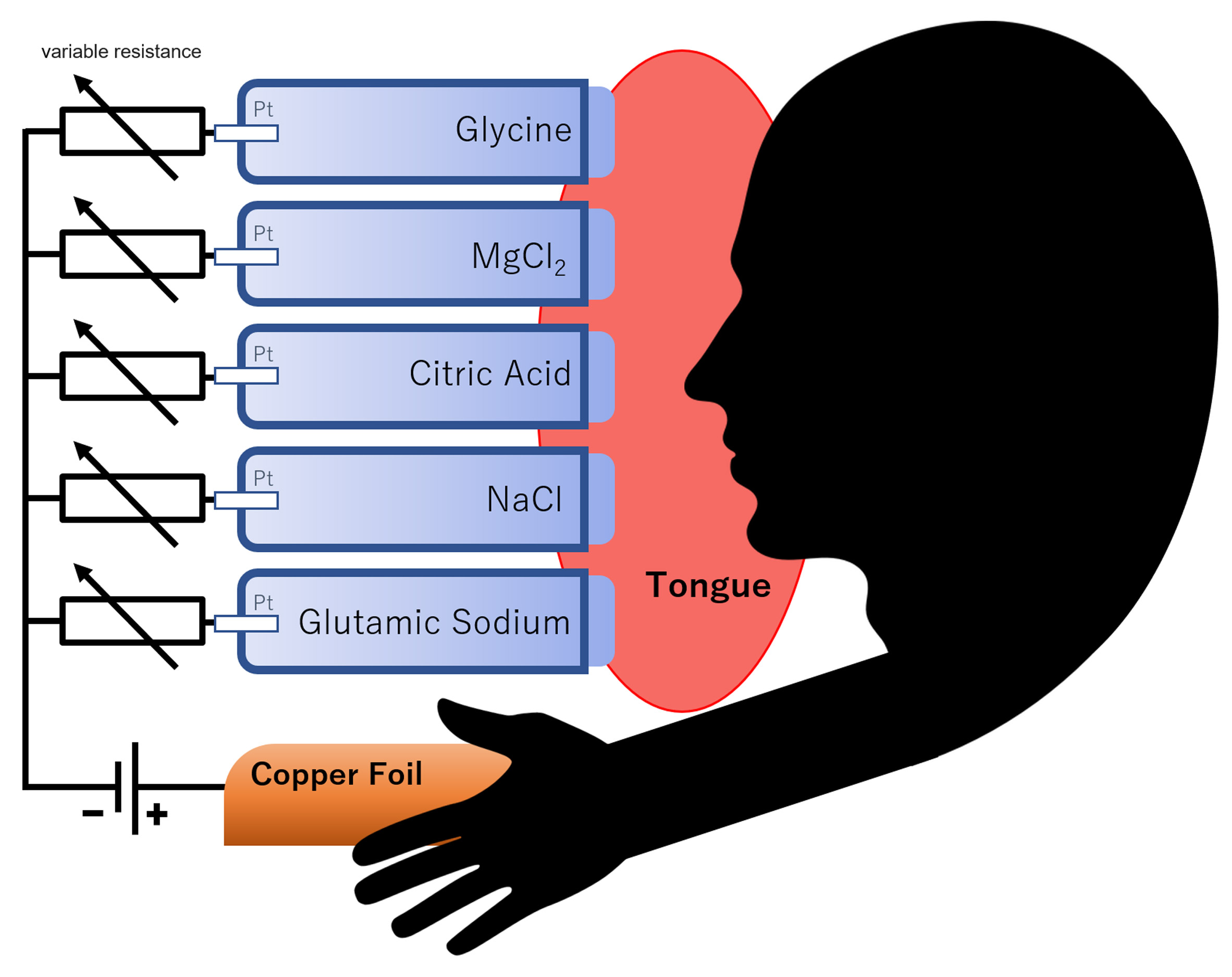
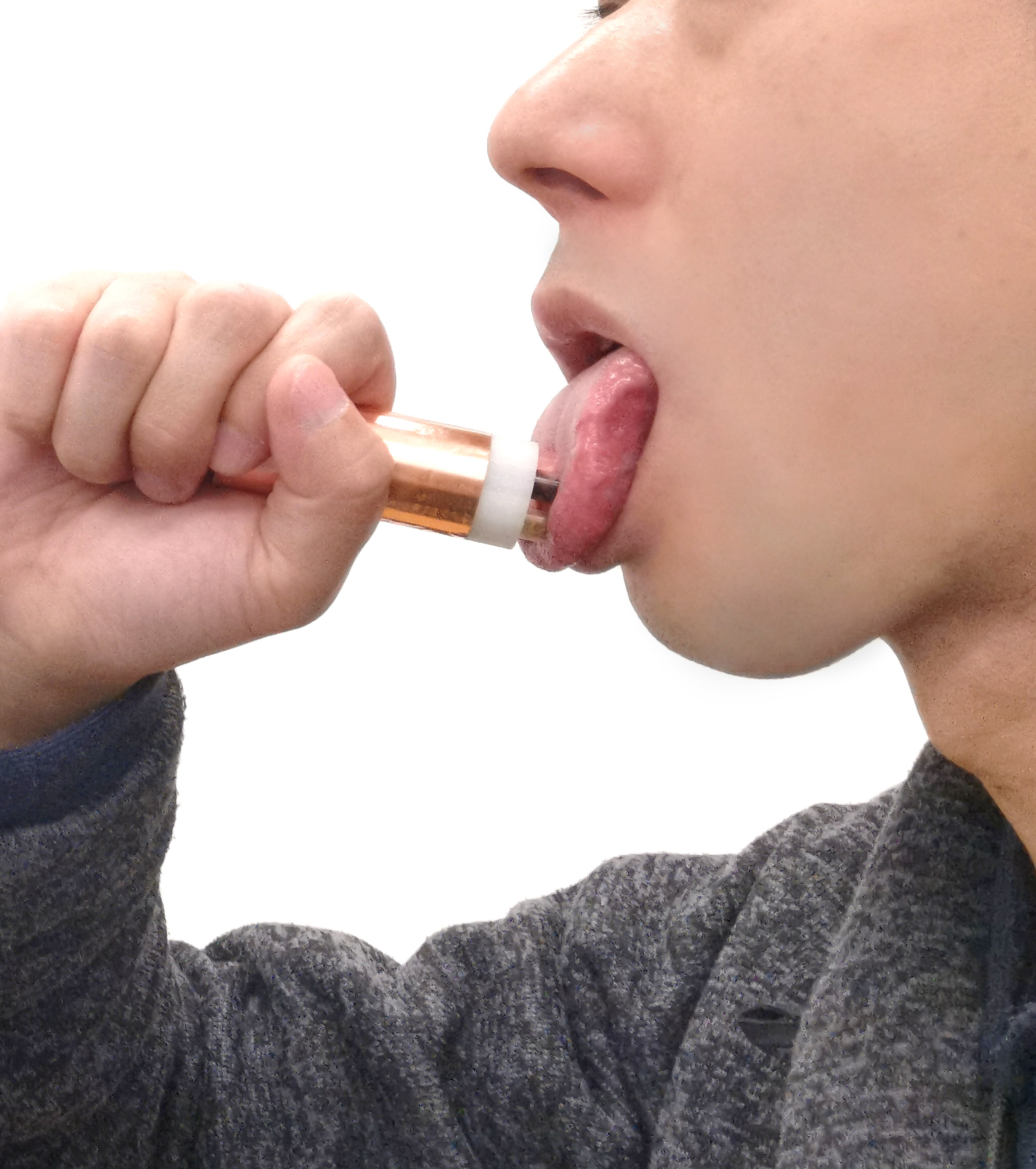
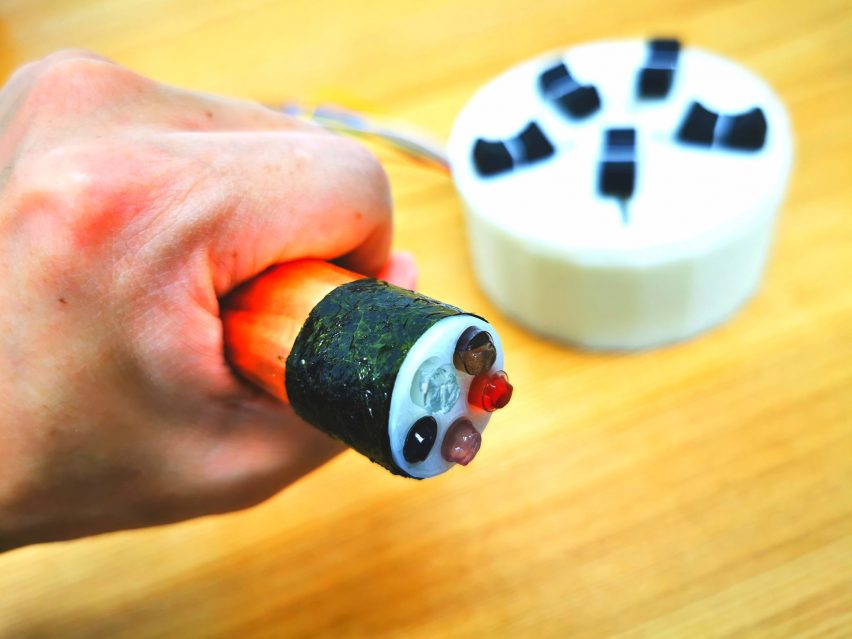
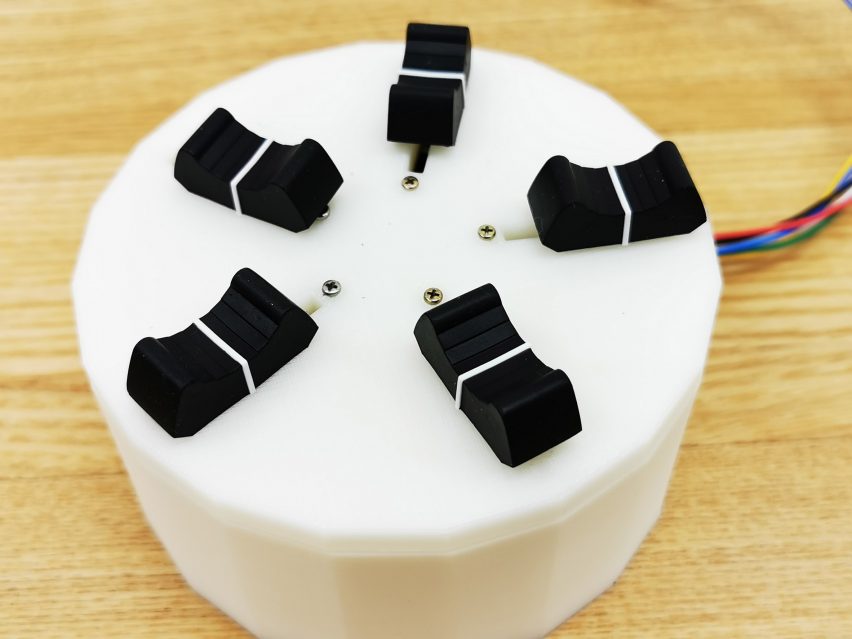
Credit @ Dezeen – Miyashita Laboratory – Meiji University
I guess Morpheus was right, after all. Upon placing their tongues on the device, tasters can retract whatever gel they desire, combine gels for unique flavors, or taste all five at once and experience a new world of flavor. On top of that, subtle additives like scents can be introduced to complete a desired illusion. Miyashita’s report states:
“When we wrapped the device in dried seaweed, presenting taste of salty and sour with seaweed scent causes illusion of actually eating sushi.”
(Miyashita, Norimaki Synthesizer: Taste Display Using Ion Electrophoresis in Five Gels (April 28): 5)
Professor Miyashita clearly loves his work and wants to live in a world where you can lick your phone screen and taste the pixels. To this end, he’s developed all sorts of taste-altering gadgets, such as electric lollipops, edible lenticular jelly, and, my personal favorite, a pair of electric chopsticks that stimulate saltiness without the need for salt. All of this has led to his most recent invention, Taste the TV (TTTV)
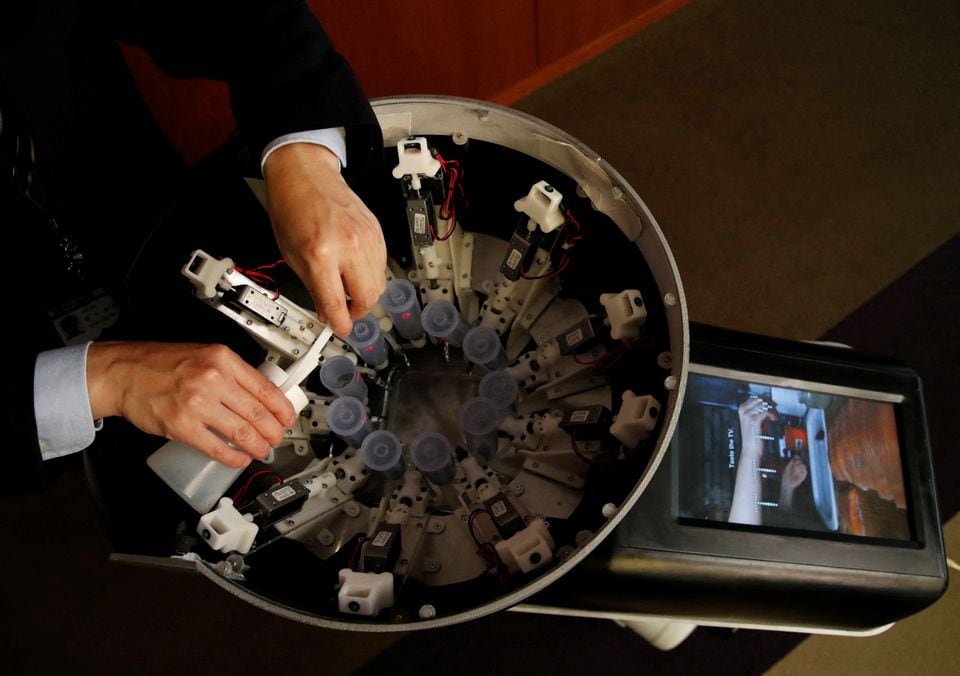
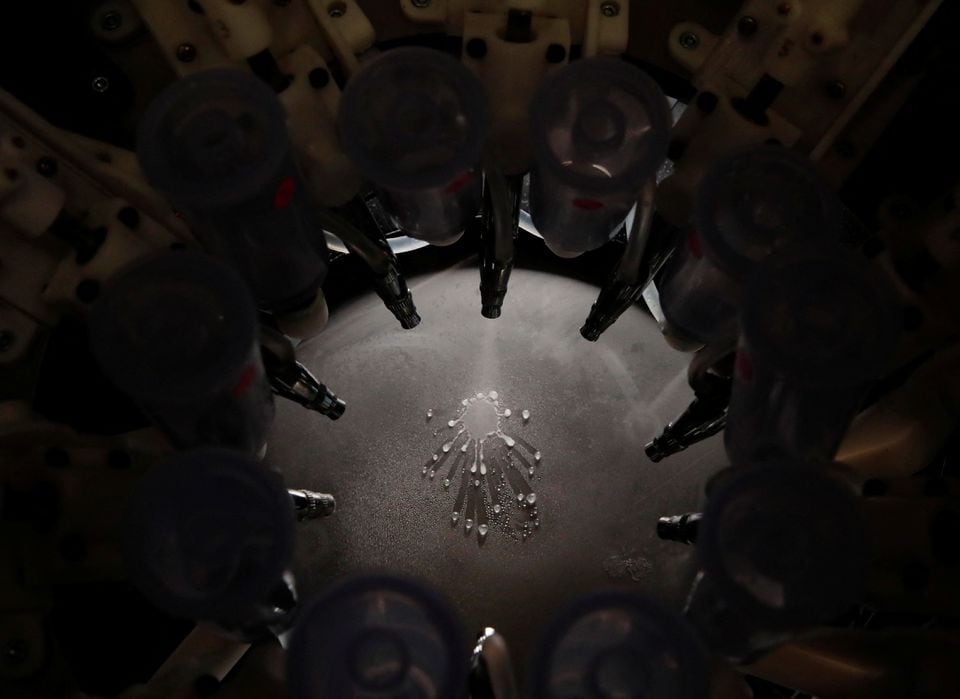
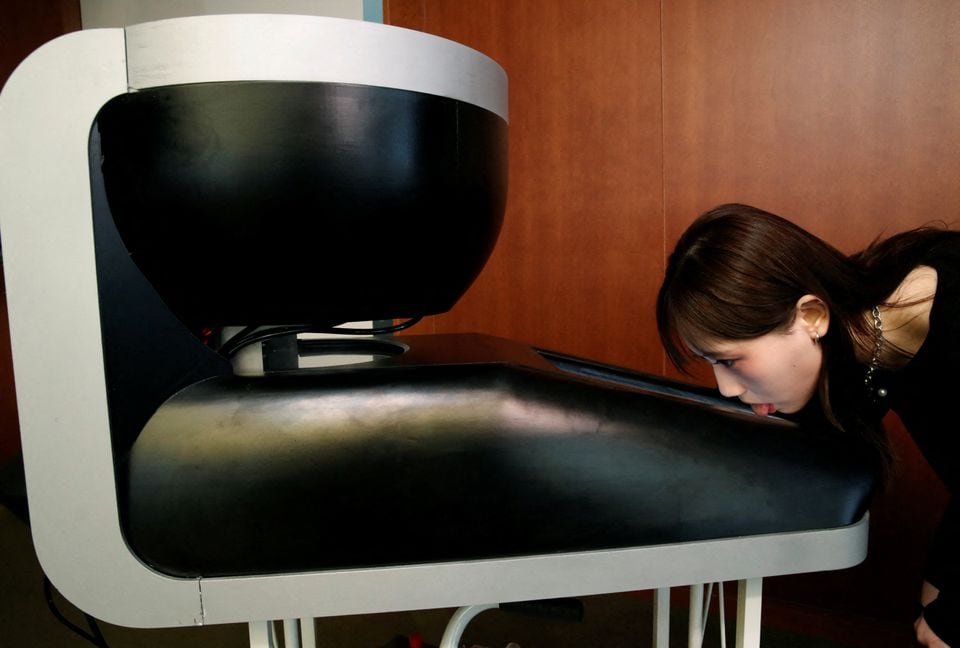
Credit @ Reuters – Miyashita Laboratory
Using solution-filled canisters, the machine sprays a liquid onto disposable films, which the viewer can lick. Unlike your generic food spray, TTTV uses taste sensors that carefully measure the intensity of tastes and compile them into data. That data is then used to construct the solution for specific flavors. All you got in It’s the virtual chef and sommelier’s dream. I can visualize it as a tool to introduce new foods for picky eaters and perhaps those with specific allergens. It can even be used recreationally, as it comes preinstalled with taste games, quizzes, and video chat. If you’ve ever wanted to eat with someone but don’t have the budget, TTTV is your friend. Your 875-dollar friend. But are liquid solutions really the extent of the tasting experience? Of course not.
Sure, we can taste with our tongues, and in most cases, it is enough, but if we genuinely want to simulate eating, let’s add a little haptic feedback.
The Virtual Lip Tingles
The more research I conduct into the world of XR cuisine, the more intrigued I become at all the ingenuity and solutions that arise, like this particular gadget:
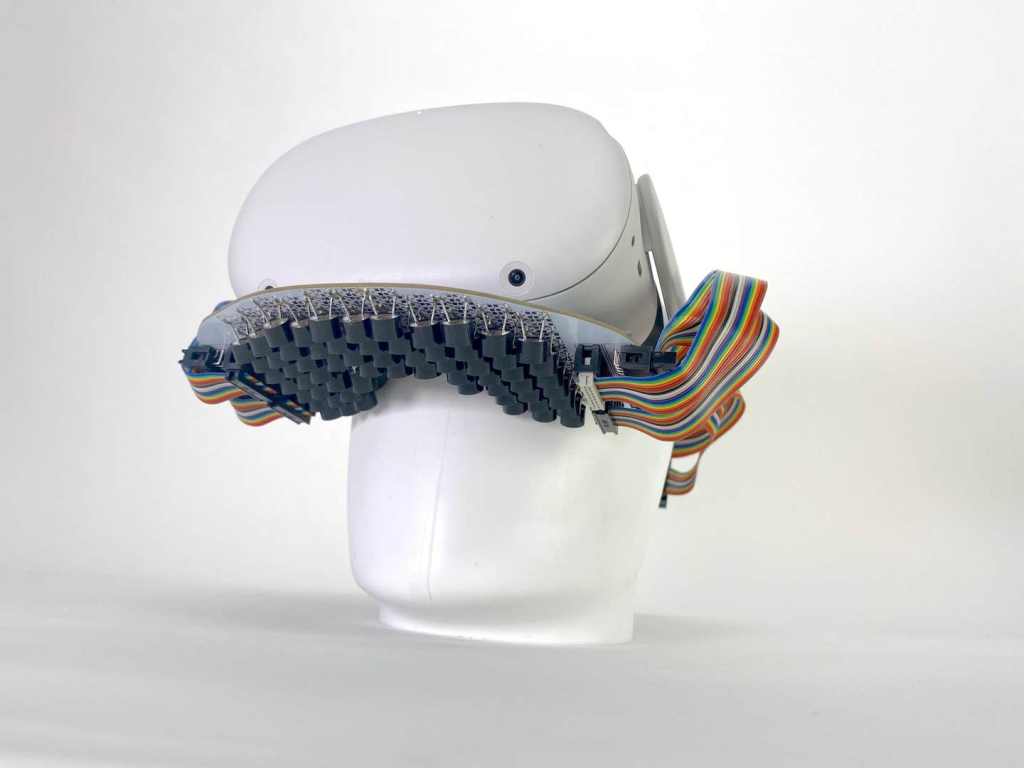
In May of 2022, Future Interfaces Group developed a particular interface that uses an array of ultrasound speakers called ‘transducers.’ These transducers produce high-frequency sound waves called ‘pressure waves’ that our ears cannot detect. The speakers can then be adjusted to match our facial structures and focused on firing in specific ways to coincide with what the player is experiencing. Our mouths are very flexible and sensitive to pressure, Director Chris Harrison says:
“If you put those together in interesting ways and you couple them with good sound design and good visual design, it actually is quite immersive.”
Chris Harrison 2022, Future Interfaces Group
Testers could feel bugs, water, wind, and even hot beverages like coffee in their simulations. It comes back to how personal using your mouth is. Your expression, the stretch and pull, and the subtle sensations make life worth living. With how recent this specific section of the XR space is, there aren’t that many examples to draw from, but let’s brainstorm a little and visualize a world where you can taste the pixels.
Cooking Sims:
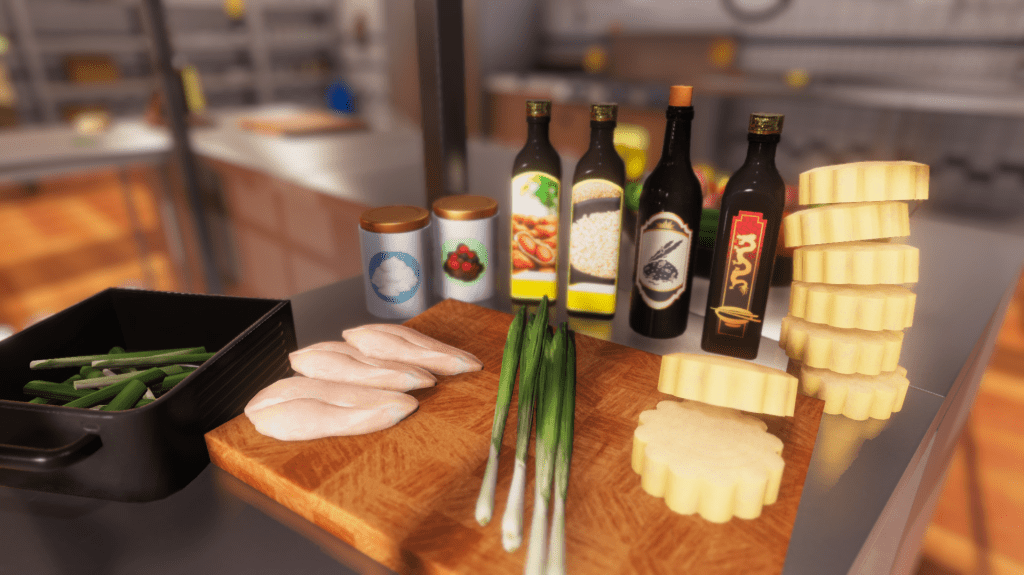
These kinds of games already exist, but they can be perfected with XR tech. Every good chef knows to taste their food before serving it. Once taste technology becomes more adaptable with VR, we will have fully realized cooking simulators. We can taste ingredients, smell for freshness, and taste the final product. It could even be implemented in culinary schools. Here’s hoping for a Cooking Mama remake.
Survival Sims:

There are many of these already, and implementing taste will take them to the next level. Let’s say you want some survival training and want to know the taste of wild game and plants. The simulator can present you with a wide variety of subsistence that you may not have even thought was safe to eat. And if you don’t like the taste, teach yourself to get over it. You’ll have to drink your urine eventually.
Dating Sims:

Recently, there’s been a massive upsurge in online dating due to the effects of COVID-19. Love can bloom anywhere, even in VR spaces. With the Metaverse gaining more traction, we’ve seen an influx of VR dating spaces, like Flirtual, Nevermet, and Planet Theta. As physical interaction decreases, taste displays and mouth haptics can fill the void many of us feel as social creatures. I just worry what it will do to our species…
How Was Your Meal?
Keep in mind that the taste genre is still far from realization. It’s the final frontier of XR tech for a reason. In time, these technologies will become one, and when they do, it will be the end of us all…
I’m being dramatic, but it will be everywhere. Medicine, in particular, is a vast field for this technology. There have been talks for years and research papers about how virtual eating and tasting can help cope with eating disorders. Taste is the least researched sense in health; by understanding and replicating it in a digital space, what we know about medicine will forever change.
It’s incredible how the simple act of eating can cause a desire for a world where we can taste the pixels. I’ve always dreamed of consuming freaky monster meat from Monster Hunter or monster cake from The Legend of Zelda. When the tech finally arrives, I want to know what you, dear reader, would love to taste. How can the virtual world help you discover new tastes?
 Embrace the Pixels