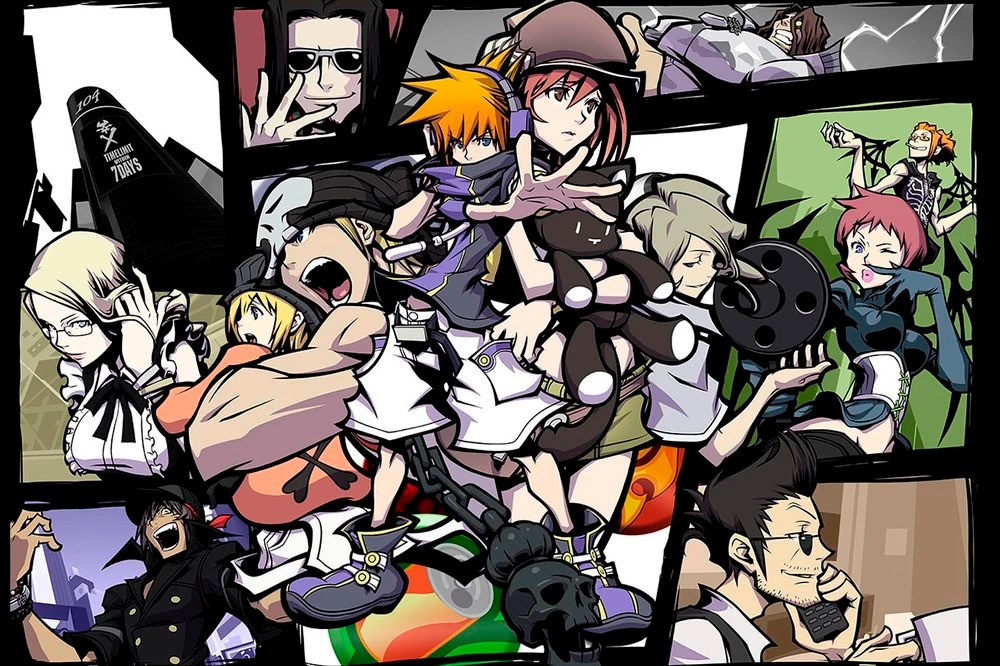
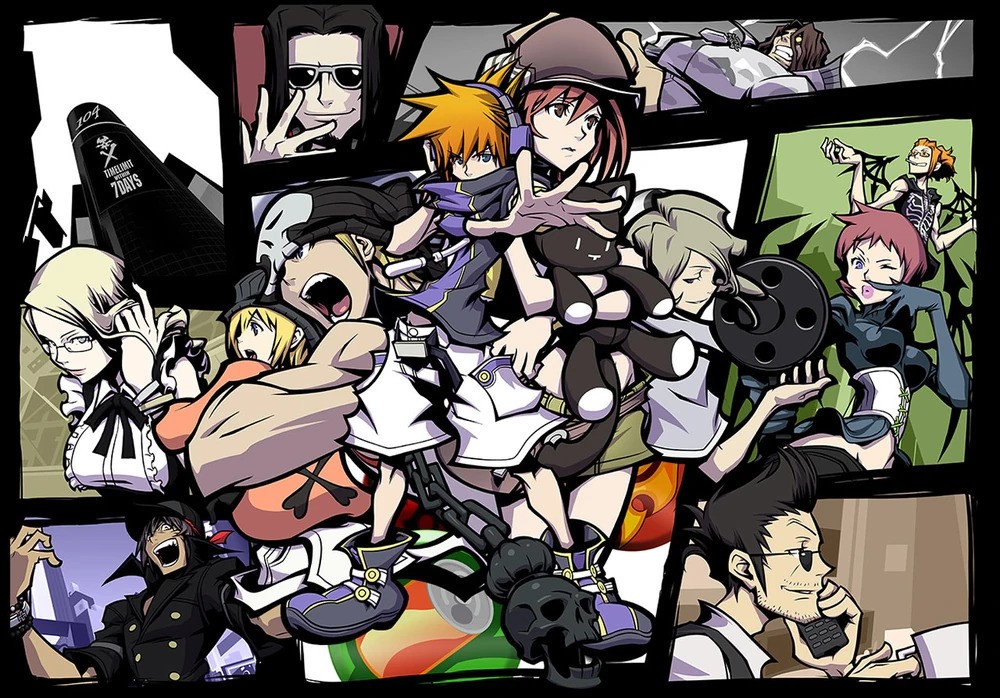
I have two questions for you, dear reader. First question: What determines your enjoyment of a game? For me, it differs, but most of the time, I default to controls. My hands and my brain need to be engaged. Every button press needs to have a purpose. Every minuscule motion of my fingers must be met with an appropriate response from the game. If the controls suck, then… you better hope your story’s good. Although, as much as I’ve always desired, I’ve never played a game with dysfunctional controls. I have, however, played games with weird controls, and they don’t get much weirder than The World Ends With You.
Second question: What makes controls ‘bad?” Is it the interface, the game itself, or both? I… don’t really know, but from my experience, just because some controls don’t follow traditional formats doesn’t mean they’re bad. I can sympathize with the modern gamer trying to play classics like the original Tomb Raider games. I, however, have nothing but ridicule for those who lambast the original Skyward Sword on Wii for having ‘bad controls.’ Motion controls are good; just because it’s too much of a hassle for you to move something other than your fingers does not translate to poor controls.
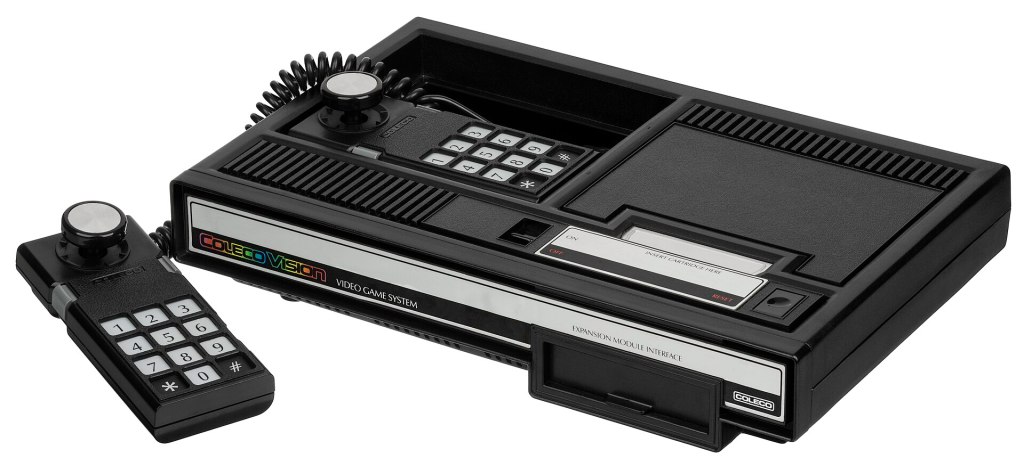
The controller shapes the console’s identity as much as the games do. Before the NES was released, with its 4-directional pad and two face buttons, controllers were bizarre amalgamations of sticks, knobs, discs, and numeric keypads that you may mistake for a phone. Of course, the technology wasn’t there yet, and video games were much more primitive in design.
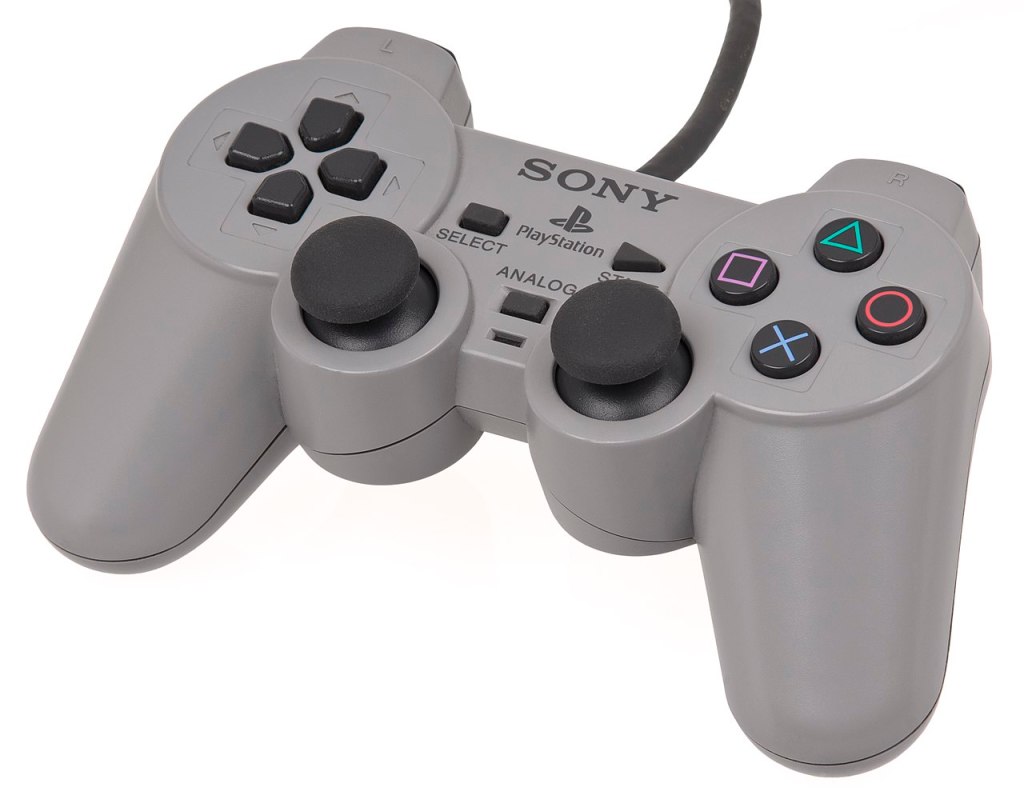
A decade after the NES came the advent of 3D games, and Sony’s twin-sticked 16-button Dualshock set a gold standard for modern gaming controllers. It seems almost by default that modern controllers emulate either Sony or Microsoft’s offset design. Anything that doesn’t follow this norm becomes the subject of ridicule. Then, we have Nintendo, who loves to reinvent the wheel with every console generation, conjuring up new ways to manipulate pixels and push creative boundaries. Even if it means taking away buttons and replacing them with entirely different functions.
The Nintendo DS, being a handheld system, is intrinsically different. It was a market Nintendo was unrivaled in and had no actual competition until the PSP hit the scene. The PSP was a beast of a handheld, complete with a joystick, but besides its powerful hardware, it had no true defining feature. Oh, it could play music and movies? Cool… so could the PS2. Anything the PSP could do, the PS2 could do just as well, and the eventual PS3 could do better. The DS was in its own field, and a significant factor of its success, besides its lower price point, is its unique features.
Touch screens are everywhere nowadays. They provide infinite flexibility and, once upon a time, allowed the stickless DS to get away with games that should have never worked, like Mario 64 and Metroid Prime Hunters. The illusion of 3D control at the touch of your stylus. It was a console that urged developers to be creative. To think outside the box and create a unique gaming experience. This feature blessed us with my favorite video game ever, The World Ends With You.
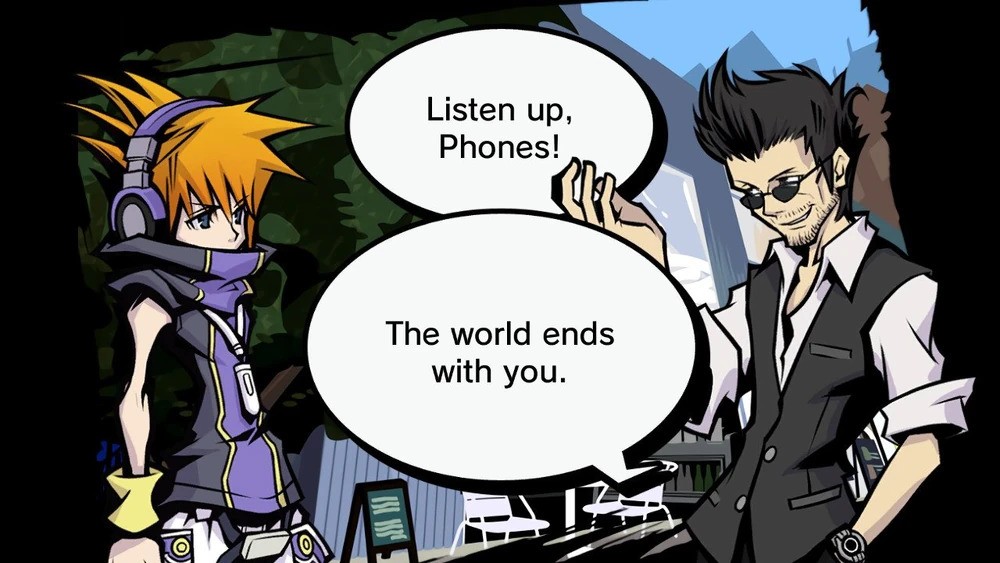
I LOVE The World Ends With You, or TWEWY for short. It is a game that changed my life, shaped me as a person, and taught me to not be so angsty. It helps that it came around the time when I was an angsty teen, 13 years old specifically. Even now, as a 26-year-old, I appreciate the game for its excellent writing, characters, and unique gameplay. Most importantly, it showed me the true creative potential of video game design. If there is a game that is tailor-made for a specific console and utilizes every one of its functions, look no further than its patented ‘Stride Battle Cross System.’ Two screens, two characters, two hands, one stylus, and a lot of Noise. At the bottom, we got our boy Neku rockin’ it to some tunes. At the top, there’s the Partner character Shiki, Joshua, or Beat. They each have the same base gameplay, with some minor alterations to their end goals.


Controlling two characters at once is the defining gimmick of TWEWY, one that perfectly ties to its narrative themes of trust and camaraderie but simultaneously provides combat like no other RPG. Your partner can fend for themselves, but it’s more fun to multitask and is required to perform the game’s powerful fusion psychs. The d-pad and the face buttons have the exact same mapping, and both control the character above. It may seem strange initially, but if you’re left-handed, this is a godsend. No matter how you hold the system, you’re using all of the buttons available on one hand and can play comfortably either way. But the real backbone of TWEWY’s combat comes from the touch screen.
The touch screen is a canvas of death, made to respond to the strokes of your pen with pillars of flame, streaks of lightning, rock slides, earthquakes, sharp blades, and many more. Neku’s attacks are specific to the pins he’s wearing and correspond to specific touch motions. And, of course, we can’t forget about the microphone, which also serves as an additional attack. Overall, we got:
- (T) Touch
- (S) Slash
- (P) Press
- (D) Drag
- (H) Scratch
- (C) Circle
- (M) Microphone
- (R) Rapid-tap
- (B) Touch the pin
- (A) Automatic
If the stylus actions had specified buttons, we’d be looking at a total of 18 buttons. It’s not the type of game anyone can pick up, play, and immediately get good. The simplicity of the actions themselves doesn’t speak for the complexity of the combat. Control-wise, the game demands a lot from you—steep learning curve and all. Some motions can even overlap and cause some issues; thankfully, there’s a sub-menu you can assign pins to, which can be toggled with the shoulder buttons during battle. The game provides such a vast library of actions that, with enough experimentation and creativity, you can find a unique flow to every battle. That’s the key word here, ‘flow.’
To master TWEWY means finding a good flow between the combat on both screens and the timing of both your swipes and button presses. It’s something that can’t be replicated by any ordinary control scheme—the extra layer of physicality the touch screen adds elevates TWEWY from another action RPG to something extraordinary. A killer app that showcased everything the DS was capable of, not just from a graphical and musical standpoint but a mechanical one. Unfortunately, I can’t say the same for the sequel NEO: The World Ends With You. While an excellent game in its own right, with its unique learning curve, the DS original is one of a kind in gameplay, functions, and mechanics.
What games do you know of that engage your skills in a unique way? Games that changed your perspective of what controls are capable of? Tell me, I want to reach ultimate weirdness.
 Embrace the Pixels