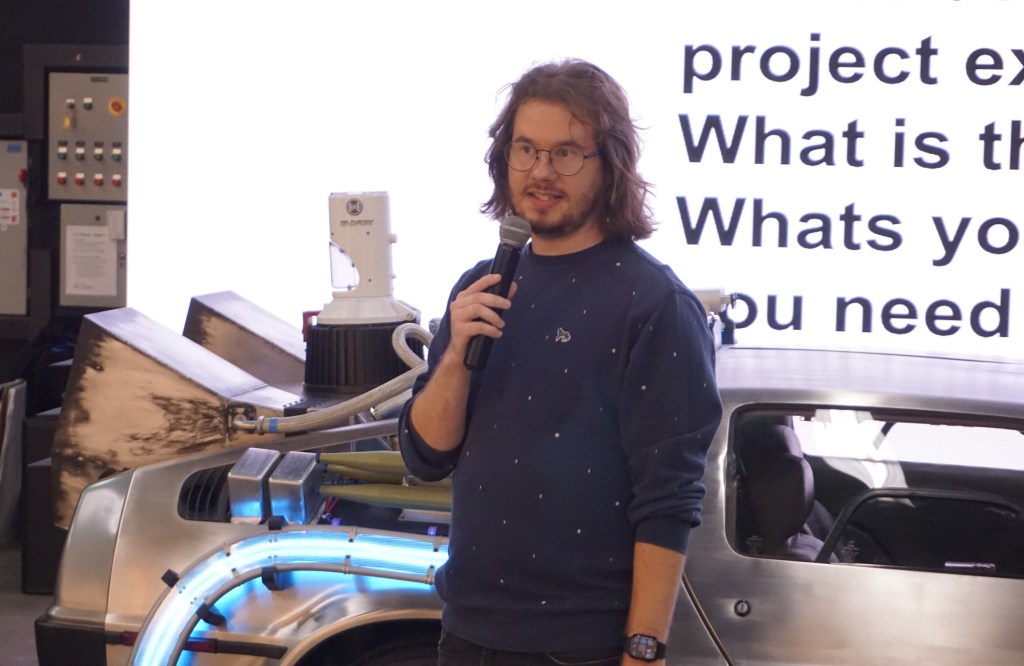
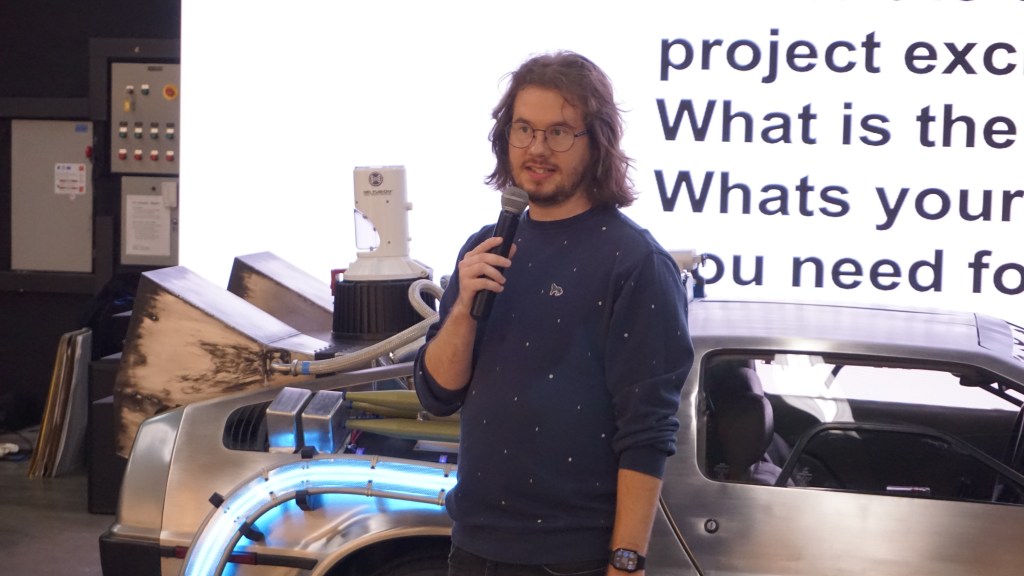
My first of a new segment: Talking Pixels! At the Indie Galactic Space Jam, I had an opportunity to speak with people close to the Space industry, and former NASA aerospace engineer Hunter Hatchell had a lot to say. We spoke on a variety of topics regarding space, games, and his plans going forward as a space aficionado. The text below is a heavily edited version of our convo. I try to keep as much of the original interview as I can while editing out some of the filler and adding in a few words for readability. With that said, please enjoy!
What was working at NASA like, and how long did you work for them?
Hunter:
I’ve worked for NASA for about three years. The type of stuff you get to do is very unique, interesting, and just pure awesome. Just to have conversations related to things that actually are in space, supporting people in space, or putting things into space is great. Besides that, the offices kind of sucked. Most of the offices are from the 60s and are full of asbestos.
Gio:
Oh, really?
Hunter:
Yeah. It’s not exactly what you see in the movies. The type of work you’re doing, and the people you’re working with are all incredible, so that makes up for the awkward office environment.
What is your professional background like? Why did you join NASA?
Hunter:
I have two degrees in aerospace engineering—one in astronautics and another in bioastronautics. I’m passionate about putting living things in space and keeping them alive while they’re there. While I was at NASA, I was working on spacesuits. I spent two years working on advanced lunar space suits and helped Blue Origin and SpaceX with similar projects. I also helped JAXA with the pressurized rover and some lunar terrain vehicle stuff, too.
How far have spacesuits come since they were first introduced?
Hunter:
Yeah, that’s a long answer. In some ways, those suits were better than the ones we’re currently using in space, and in other ways, better than the ones we may be flying in the future. What has improved significantly are the life support systems integrated into the suits. The electronics and the quality of mechanisms that support people in the spacesuit have also improved over time. The suits were also custom fit for the astronaut, which is not what NASA is doing on the ISS and in the future. Another big improvement is lower torso mobility. The reason why you saw astronauts bunny hopping on the moon was because their legs didn’t have as much mobility as the newer suits. If you look at any of the newer suits, you can see them kneeling, touching, and grabbing things. The Apollo guys had to fall over and jump back up because their legs were limited.
As an aerospace engineer, have you built any rockets?
Hunter:
Back in high school, I lead a little rocketry club. We built model rockets, and I planned out concepts for hybrid rocket engines for my degree. I wouldn’t say I’ve built anything that has flown anywhere in real life for my job because I like more of the human side of interfacing.
Have you met any astronauts?
Hunter:
Yeah, Victor Glover was probably one of the most popular ones that I’ve seen. One of my mentors is the daughter of an astronaut. Her name is Amy Ross, and her dad flew on shuttles way back in the day a bunch of times.
There are extremely strict qualifications to become an astronaut. Have you seen the type of training astronauts do?
Hunter:
Yeah, it’s a lot. Because it’s two years, it’s like you’re getting a master’s degree. You have to learn everything about all the things that you need to interact with in space while being physically fit and how to survive in space. You learn everything about space stations, rocketry, life support systems, space suits, how to put them together, clean them, how to do all the different kinds of experiments, how to sleep in space, eat in space, etc. Besides some of the physical requirements that put a load on your body, more people go to space than I think are currently allowing NASA astronauts to do so. That’s all I would say about that.
What brings you to the game jam?
Hunter:
I wouldn’t call myself an expert, but I’m certainly knowledgeable on these topics. The biggest thing that brought me here is that I like mentoring and helping people, and I’m also trying to be more involved in the community in Florida. I’m trying to do my own type of community event for the space industry called Space Happy Hour. We’re in seven cities, but I’m leading all the Florida events. It’s a place for people who are really passionate about space or space professionals who are currently in the industry to come together and bridge a lot of different kinds of gaps in the industry.
Many companies, even the different NASA centers, don’t talk too much with each other, and that’s what my brand is for. To help build community and foster a really powerful industry to start working together more, helping people find jobs, or just talking about cool stuff that they may not have a place for. Beyond that, I’m just trying to understand other communities in the Florida area. I’m also interested in starting my own company, so it’s nice being here and learning from the attendants.
In your opinion, what is the deciding factor that spells victory for the contestants? What are you expecting the most out of the teams?
Hunter:
There are different corners of the industry that have unique measures of success. Satellites for communications differ from keeping things alive versus just putting stuff in space, like rockets. So, it’d be interesting to see what these creative people come up with and what value they could generate from it. I don’t know if there’s a ‘right’ answer, but for me, it’s either having a really cool and fun thing that’s educational or something that can teach people how to understand something about their environment in space, whether that’s some type of system that they’re going to be interacting with or just the environment.
Have you played Moonbase Alpha?
Hunter:
I haven’t played. I was trying to play it with some of my friends, but I saw a lot of fun clips of it online one day.
Gio:
The memes.
Hunter:
Yeah, the memes. They’re hilarious, but I didn’t discover it until two years ago. I’m still trying to get my friends to play that game, but yeah, it looks really cool, really fun, and educational. NASA designed a lot of the assets, and you could see something very similar to that on the moon one day.
What would sports in space look like? Because what I think of when I think of physically something sporty, my mind jumps to Ender’s Game. Have you read Ender’s Game?
Hunter:
Yeah, I love Ender’s Game. I love the whole series. That’s actually where my brain goes, and I would love to see that game. They could definitely do something similar to that where they’re trying to get across different levels and stuff. It’d be a lot of fun. I think it’d be a little hard to do other kinds of games like the UT here on Earth. Tennis in space would be cool, but things would get a little weird. It would be less thrilling, I think, than actual on-planet stuff. You’d have to be creative about how you interact with that.
How feasible is a space colony like the type you see in games and movies?
Hunter:
It’s definitely feasible, but not without issues to be solved. For one, where does the money to sustain the station come from? That and most of our current technology for space travel was developed to do very specific things. There’s still a lot of development to be done when you start thinking about long-term duration. If you’re talking about self-sustainable space versus the ISS, the ISS gets resupplies from Earth all the time. It’s a different game when you can’t get resources like that from an industrialized place like Earth. If you’re living on Mars or something, it takes months to get anything there. If anything goes wrong or you need supplies, logistically, it’s gonna be difficult.
There would need to be a lot of in situ resource utilization. Where you are, you collect resources so you can mine for water. You can get stuff as you’re there and have many of the things you need. The options exist; however, we haven’t really tried as a society to do any of that stuff. We’ve experimented with things that could help us, but no one has attempted to truly build a sustainable presence on another place that’s outside of the orbit of Earth that is nearly or completely self-reliant. There’s a lot to learn there and a lot to develop and think through, especially in critical, life-threatening situations. If anything goes wrong on another planet, no one else except you is there to fix it. So, what do you do in situations like that? It’s not as easy as going to Walmart, getting the things you need, and coming back.
Do you believe in the potential of gaming technology as a tool for training?
Hunter:
Absolutely. Honestly, I would argue that there needs to be more of it for space because this type of thinking that you’ve seen or that people are doing for other types of industries, whether it’s defense, healthcare, or just video games, I think you can apply that to many much-needed areas of space that people have been researching and talking about, but no one’s truly implemented in any significant type of way outside of flight simulators for airplanes. I think that analog missions would be big. I haven’t seen much of it implemented and utilized right now, but I think, especially in the analog environment, that there are lots of things that developers could improve on using this type of thinking.
 Embrace the Pixels