

Host: Indienomicon
Theme: Space
Sponsors: OMG Labs, Cenfluence, Space Florida, Cat 5 Studios, E4C, Enludio, The Florida High Tech Corridor, Papa Johns.
Itch.io Page: https://itch.io/jam/indie-galactic-space-jam-2024
Before the Jam:
I have waited for far too long for this Jam to arrive. For those unaware, a game jam is a competition where developers make a game from scratch within a set amount of time. The time limit can vary wildly from 24 to 72 hours, but no matter what, a product must be ready to present by the end—finished or not. I consider this Jam an early birthday gift, except that the gift is the chance to blog about an event. So sit back, relax, and let me take you on a journey through the stratosphere! Let’s jam!
Day 1: Time Traveling Shenanigans
I arrived with plenty of time to kill at the Vu Orlando studios. The unassuming exterior hid something extravagant within: a massive soundstage. I’ve visited this place once to attend M3D Technologies’ open house for their incredible MERGE system.
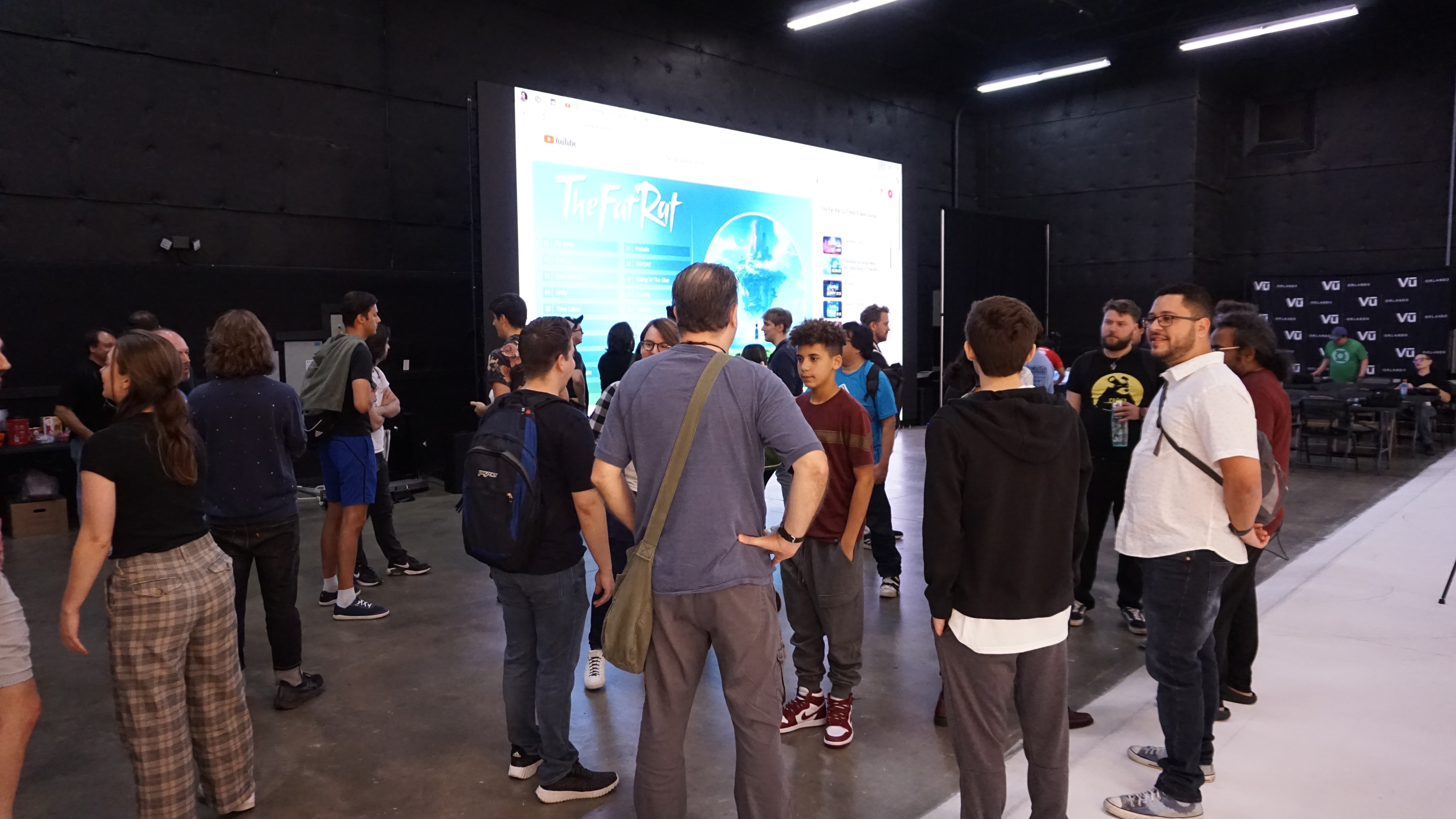
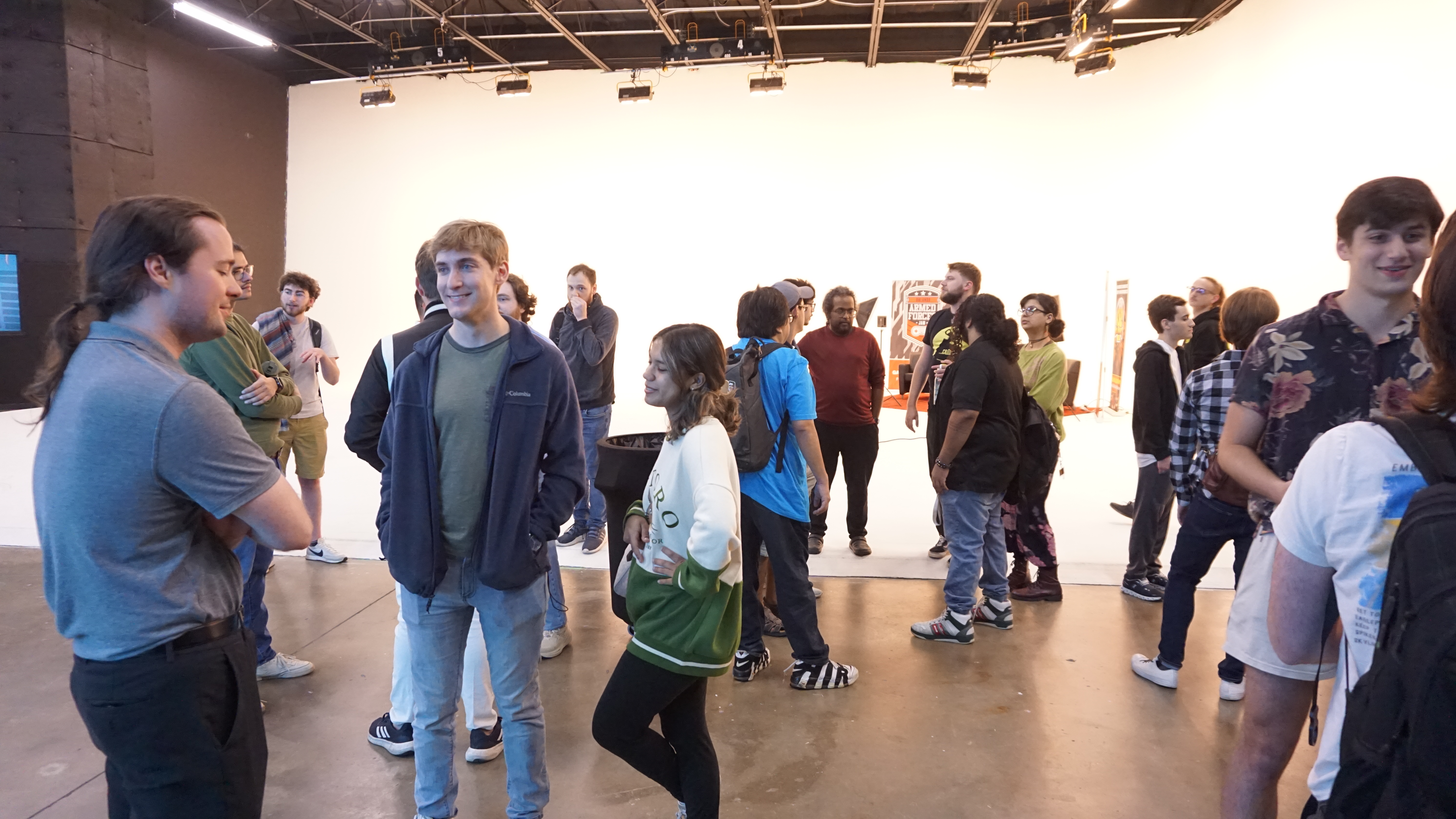
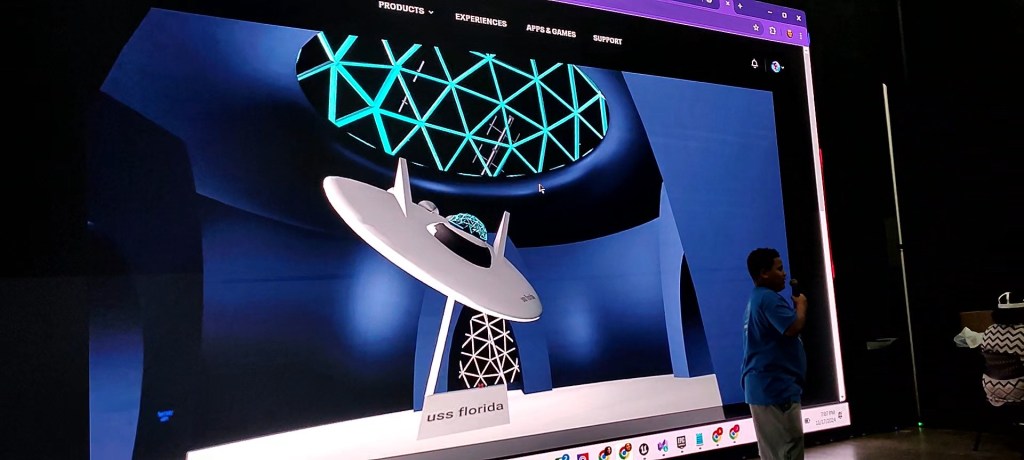
I can FEEL the money that went into this event. Vu Orlando is a studio owned by Vu Technologies, a virtual studio enterprise. That massive screen with tiny individual light nodes was awesome the first time I saw it. The closer you get to it, the hotter it gets and the worse the resolution becomes. I asked the founder of M3D Technologies, Matthew Hogan, how much the display costs to purchase, and it came to a reasonable amount of $50,000. Movie nights here must be legendary. And speaking of movies…
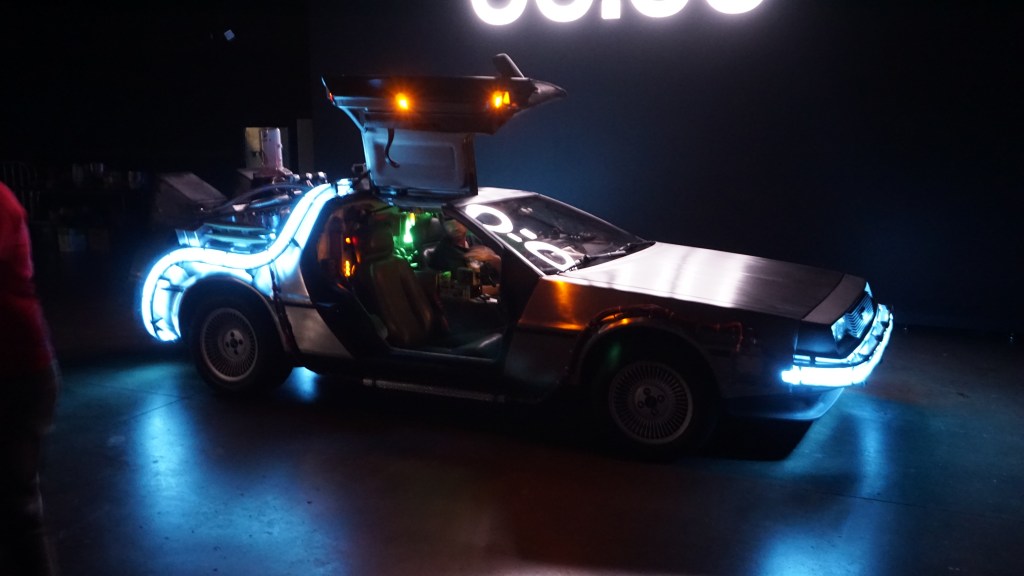
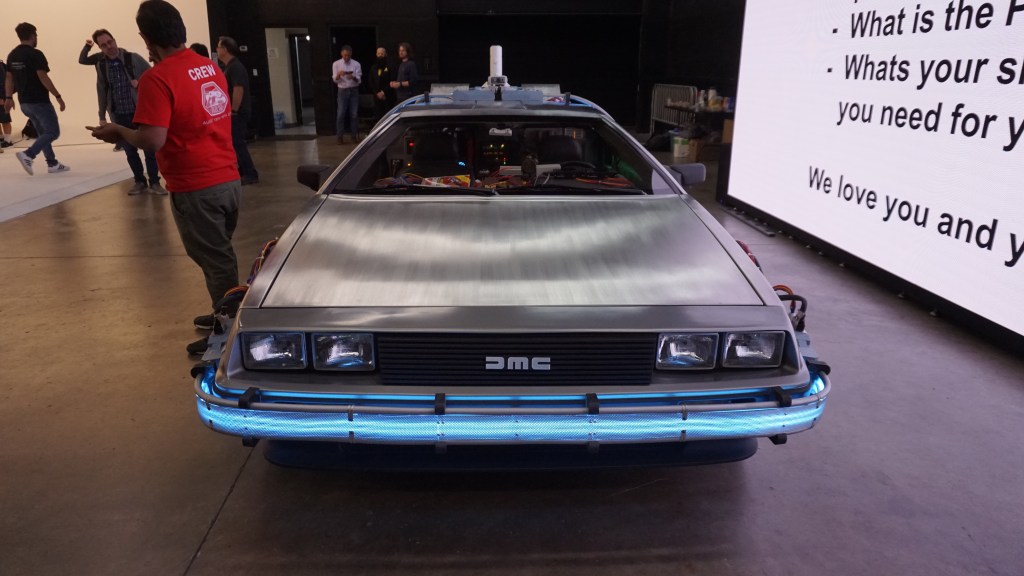
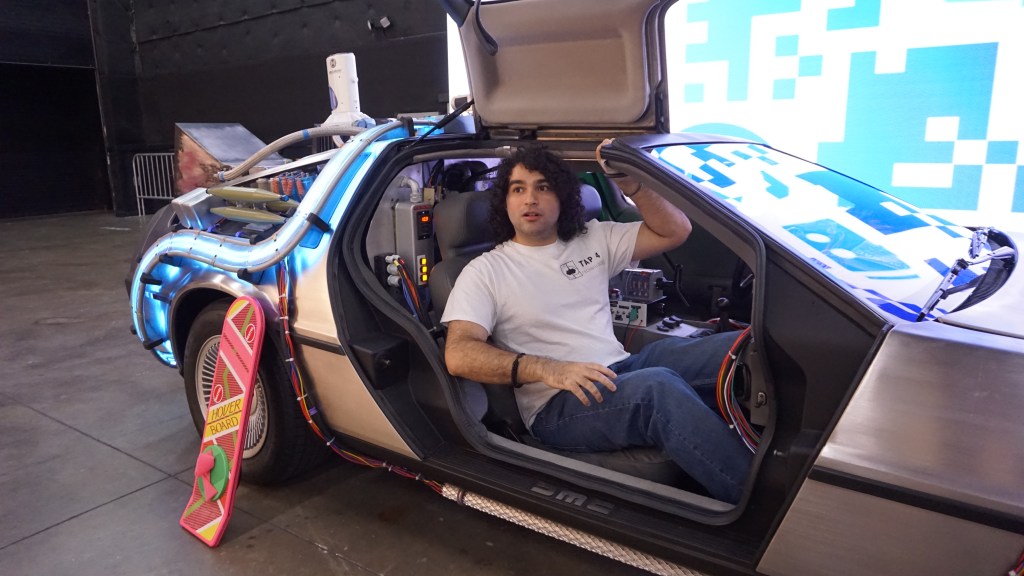
Everyone who grew up with that franchise was living the dream tonight. I’ve never seen one in person. As cool as it is, I feel no nostalgic love for the vehicle. They were before my time, and like many, I only knew about Back To The Future from the bevy of pop-culture references that followed its release. References that, like the Original Star Wars trilogy, muddied my initial viewing of them.
Yeah, thanks for spoiling it…
Kunal Patel spoke a little about the history and impact of the Indie Galactic Space Jam. When I first heard about it, it was in passing conversation, with high praise following it. Contestants have started companies and wedded their life partners throughout the years this Jam has been around. It’s the 10th anniversary of the Indie Galactic Space Jam. It all began with this Jam, and nothing was held back.
Space is a highly complex field of technology, statistics, programming, etc., an industry that, like Health, I knew very little about, so I was excited by the possibilities. With a grand prize of $2500 for first place, there was no room for casual fun. This is a REAL competition, and the contestants have an opportunity to influence and get the attention of organizations like NASA and Space Florida.
I knew just from tonight that this event would be something special.
Day 2: I Flew to the Moon
DISCLAIMER: If you've made it this far, dear reader, then I must warn you ahead of time that this studio holds something INCREDIBLE on the north side, and I had the opportunity to explore it. Keep reading to learn what it is.
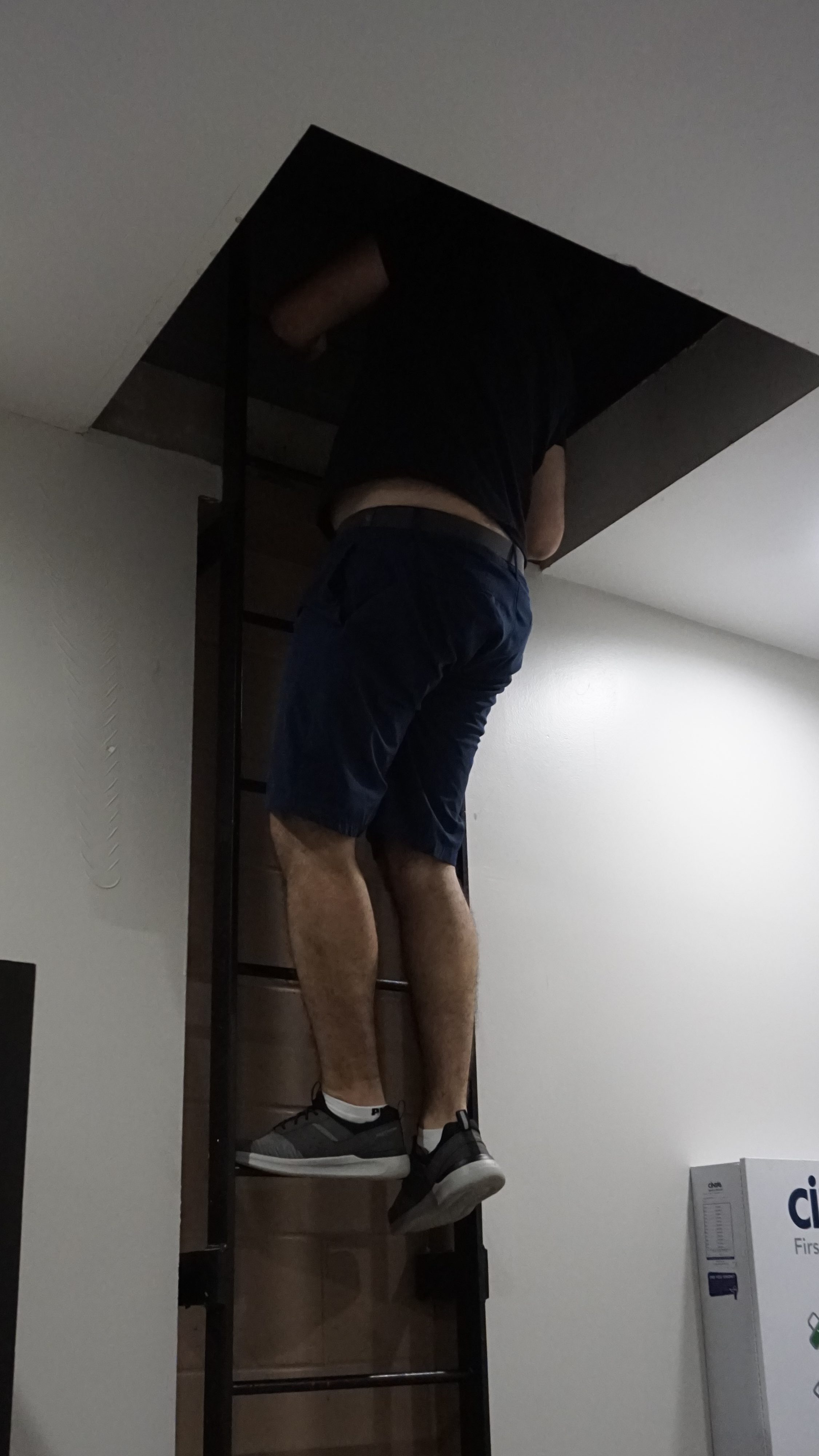
Another day at the set. Hilariously, MERGE recreated this entire space in VR, which I experienced during their open house a few months back, so seeing more of it in person was somewhat surreal. There were kitchens, living rooms, private study rooms, showers, and one team was using a makeup room. Some areas were restricted, but I got a peek at the attic.
Like the other jams, the consultants mentoring the teams were experts in their respective fields. My excitement was through the roof when I learned that workers from NASA were mentoring the event. I knew I needed interviews with them.
First was former NASA engineer Hunter Hachil. Due to privacy reasons, I won’t upload the audio; however, I plan on writing a separate post on the interviews sometime after this one. I had many questions to ask, but nothing super specific. My knowledge of anything involving space revolved around astronomy—the planets, the stars, and the hole of blackness. Anything tech-related, like aerospace or bioastronautics, was beyond my understanding, and the first guest I spoke with had a lot to say about both.
Hunter Hatchell: Former NASA engineer.
After that nice talk, I had a little time to kill before dinner. The interview with Hunter provided me with tons of information, but there was one man to whom everyone on the top brass at the event was talking about. Heck, Hunter himself referred me to him. The man in question is Robert S. Katz, and his repertoire is FAR too big for me to detail. From defense to health, to aerospace, and cyber defense, he has been to many places and held many hats.
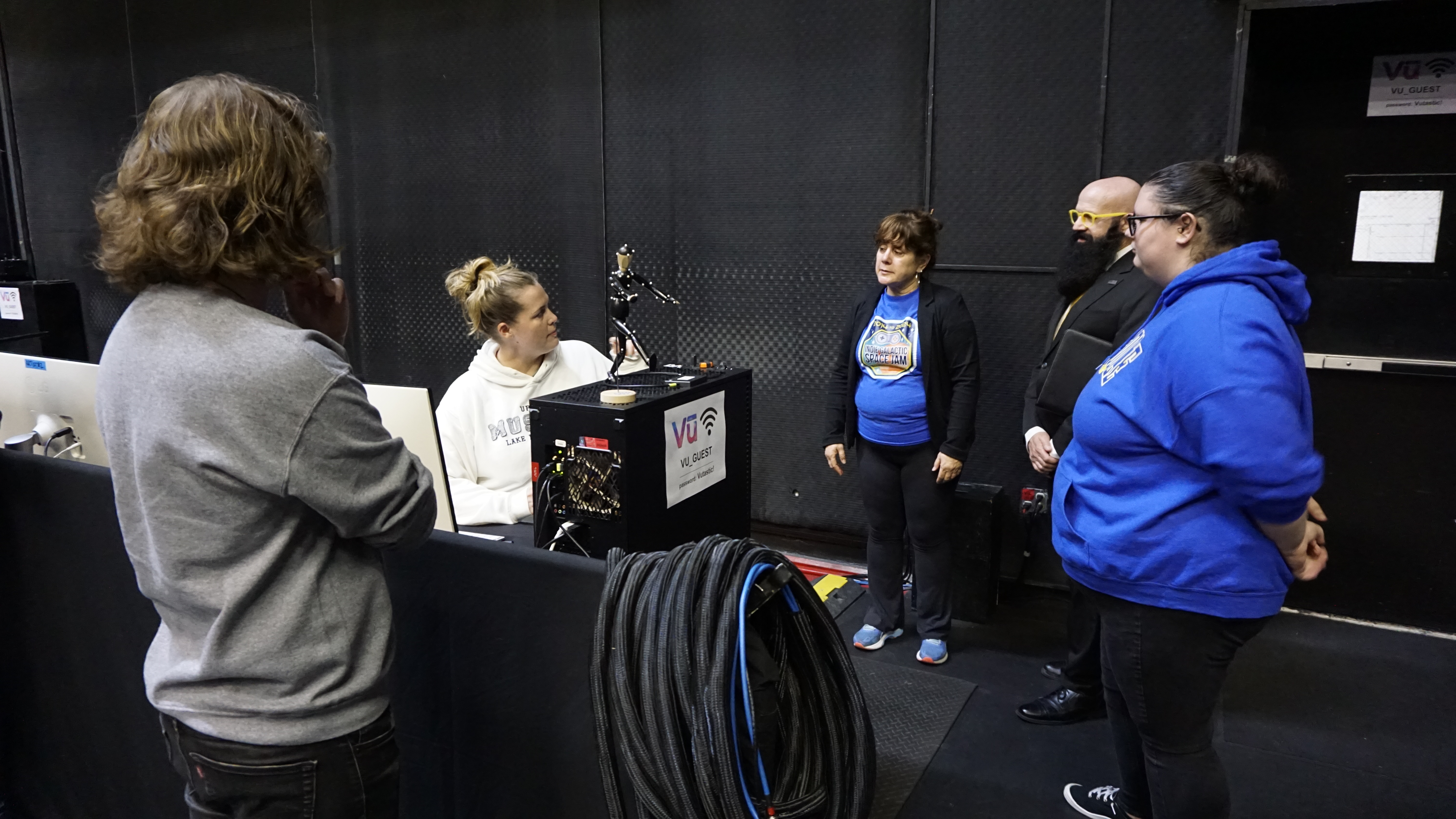
I had no idea what to ask him, but thankfully, breaking the ice wasn’t as difficult as I imagined. He, Hunter, and members from OMG Labs were taking a tour of the building, to which I excitedly joined them. Then we entered the other soundstage.

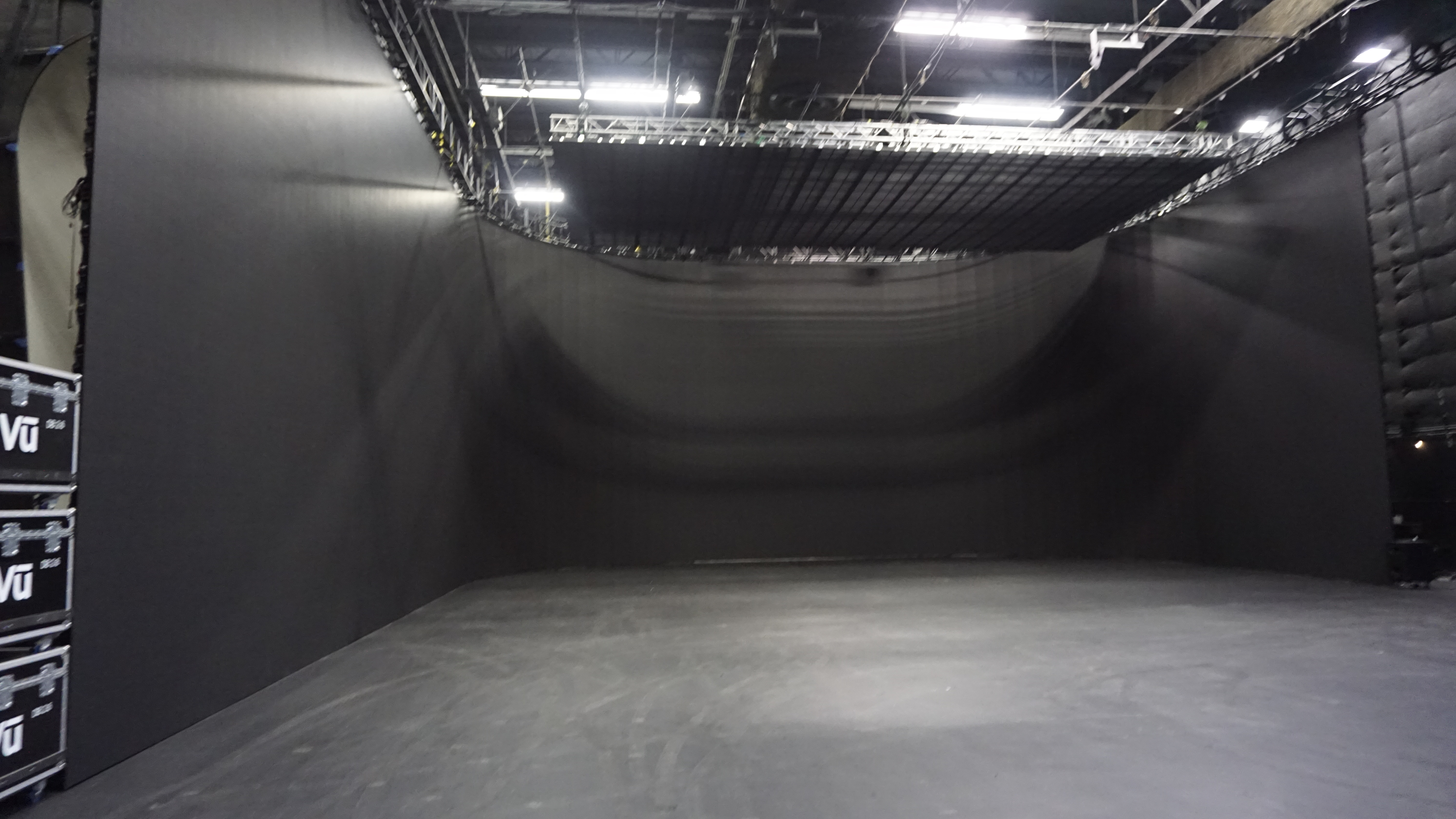
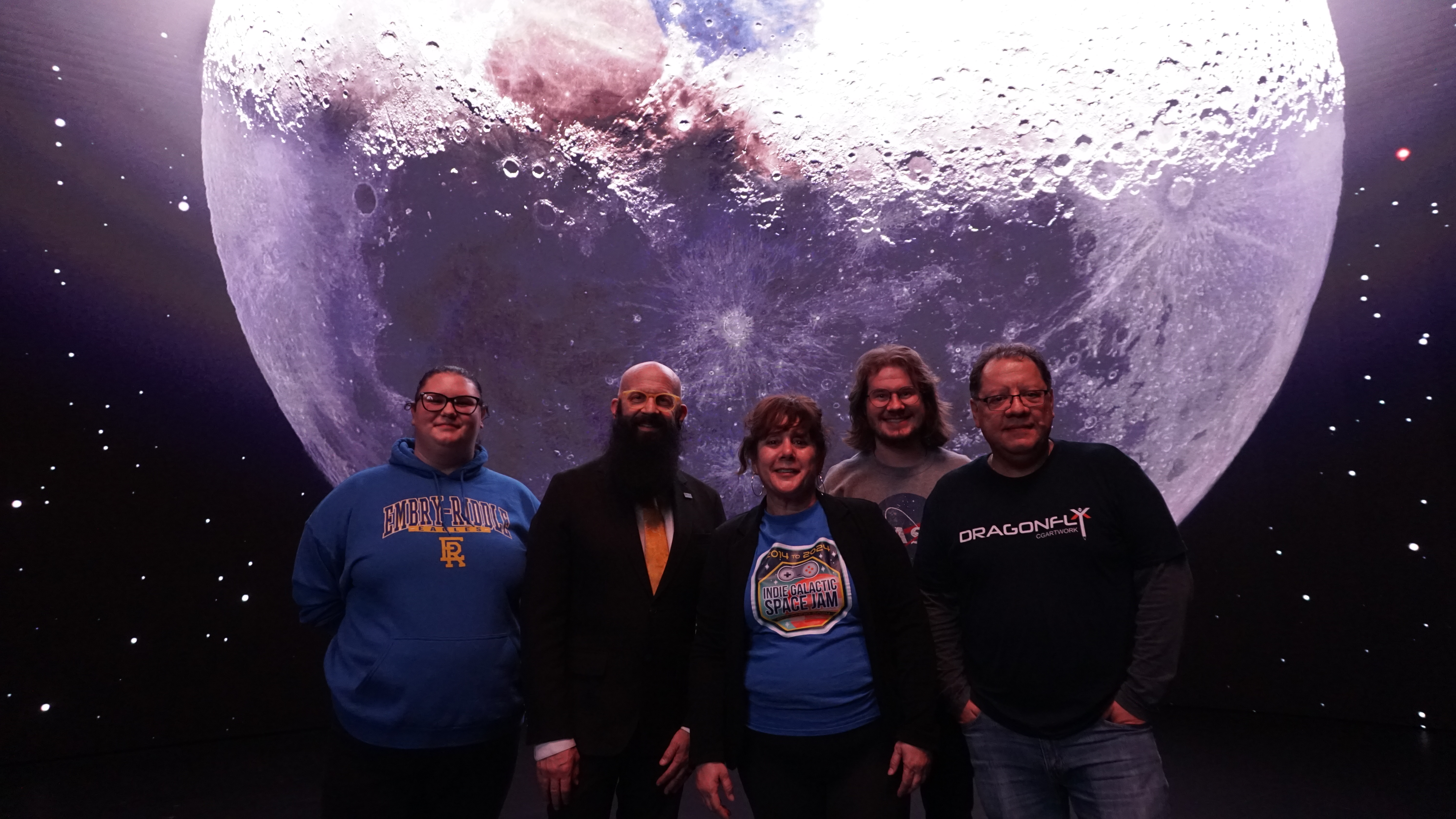
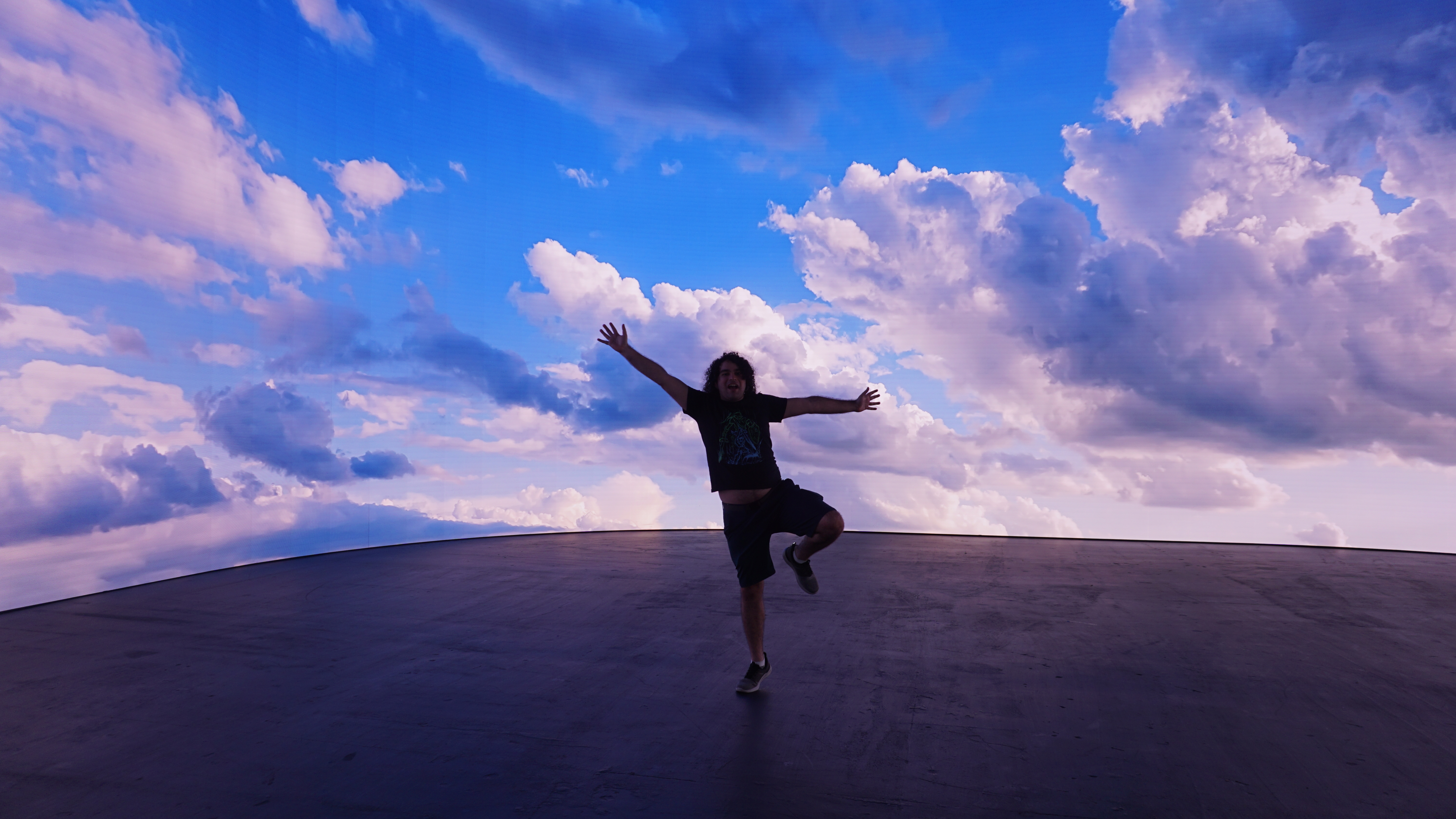
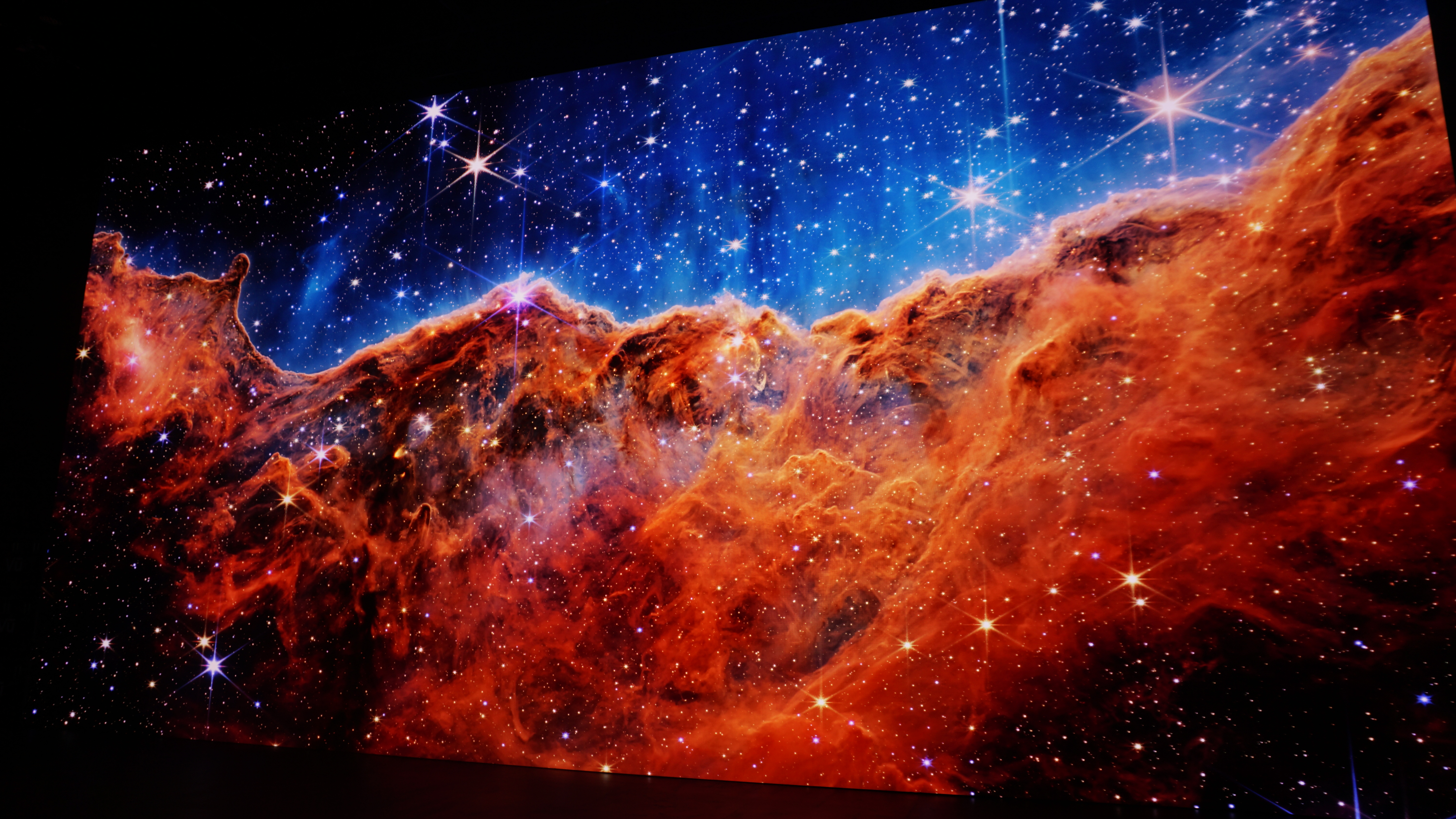
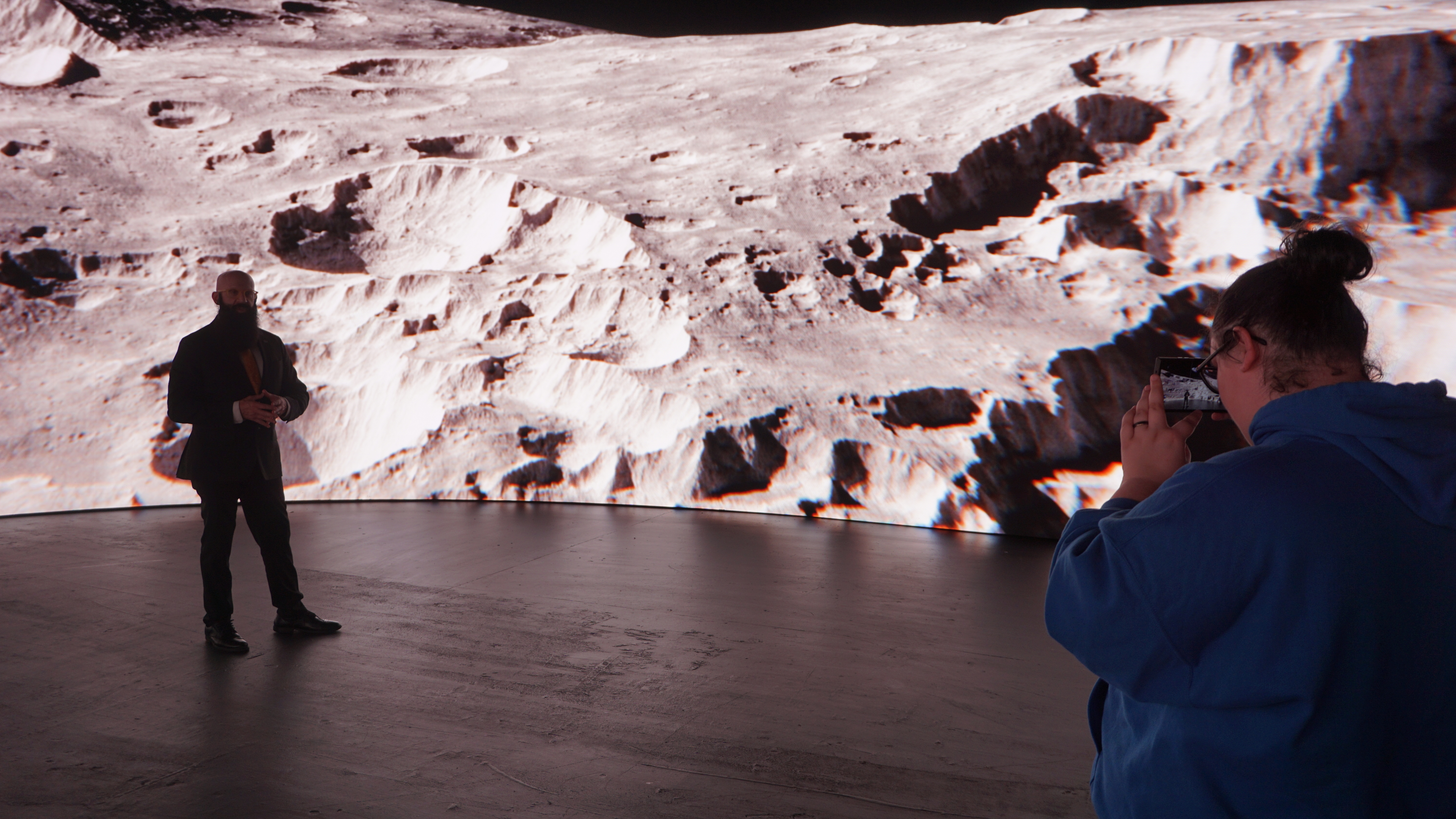
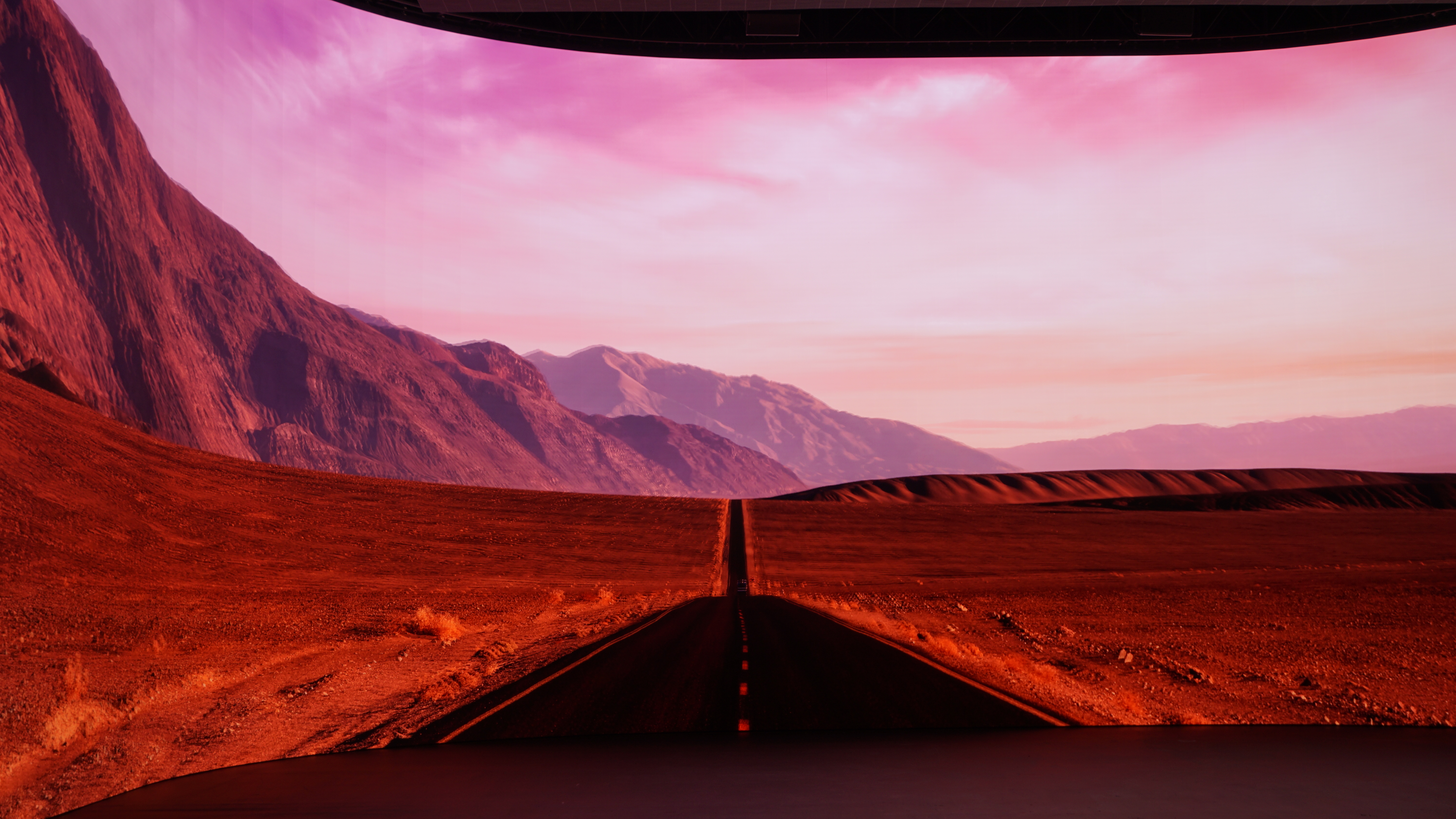
At that moment, the acting urges swelled within me. I saw the Earth beyond the cosmic horizon, so close yet so far. I flew through the skies, mirthful and free. I witnessed the digital nebula warp into an endless road swathed in the sunset. I imagined what it would be like to perform in this space, with props and mocap suits in front of an enormous screen. As short as it was, I was in bliss and was able to snag that interview.
Robert S. Katz: CEO of World Innovation Network
If there are two lessons I learned from conducting both of these talks is that DAMN, I’m getting better, and that both men fully believe in the potential of video games as training tools for the expansion of space technology.
It isn’t easy to picture what space travel, living, mechanics, and training will look like far in the future. Science-fiction media plays an important part in drafting that future, but it also does a good job of grounding us in reality. As it is only the second day, I’ve yet to see how the ideas formed from this game jam will impact that distant draft, but after what I’ve learned, I’m positive the results will be nothing short of astronomical.
Day 3: Cosmic Pixels
I’m already off to a bad start. All of my pictures were saved on my laptop, which I couldn’t use because I forgot my charger. Thus, I was unable to upload them in time for the presentation. Other than that flop-up, nothing interesting happened between now and the presentation.
Games and Summaries:
- Canaveral, We Have A Problem!
Developers: (Ava Mathews, Brian Stabile, Caris Baker, John Sermarini, Julia Galimidi, Juan Rivera)
On a lone asteroid, two players coordinate to destroy a meteor headed straight for Earth. Despite its short length, it’s very feature-complete. I wonder what exactly an “Aliengator” is, though. And how can there be wildlife on an asteroid??? - Daring Descent
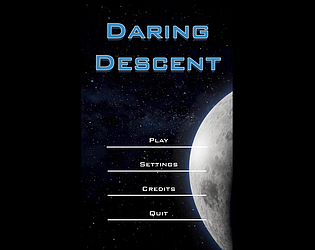
Developers: (Ahmad Haron, Christian Dall, Colton Taylor, Delano Igninoba, Fernando Villegas, Julian Holmes, Michael Hanusiak, Nicholas Drobes, Paulo Castro)
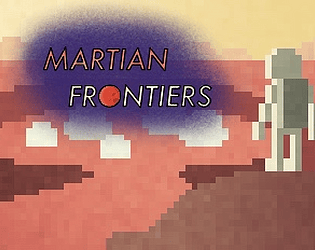
A smartphone game where you must land the rocket on the surface while avoiding hazards like random singularities—I hate those things. - Martian Frontiers
Developers: (Brian Strigel, Giancarlo Castano, Jack Drolet, Joseph Gallup, Matthew Moncalvo, Muntaser Sayed)
A Mars colonization sim. It is essentially Sim City or Civilization but in space. These kinds of games aren’t my cup of tea, but I must admit that there’s a surprising number of metrics involved with this one. - Martian Mania
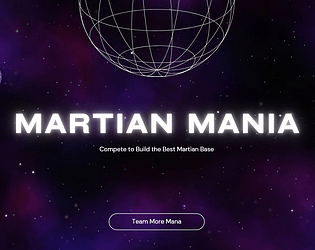
Developers: (Cole Montrose, Joseph DeMartini, Noa Baggs, Willow Rachels)
Another Mars colonization sim, but much more video-gamey. You have tower defense, base-building, third-person shooting, resource management, and procurement, and it even has multiplayer. - Space Exploration & Sometimes Explosion
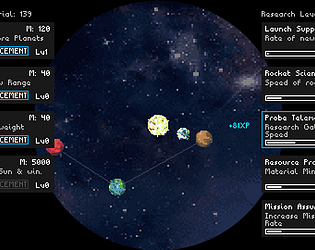
Developers: (Theory Georgiou, Anthony Bagsby)
Cookie Clicker, but in space, so Planet Clicker. The goal is to create the ever-fantastical Dyson Sphere by obtaining resources from neighboring planets. What resources can we harvest from Jupiter? I don’t know; at least Neptune has giant diamonds. - Space MGMT
Developers: (Jeremiah Garcia, Gabriel Holmes)
The premise is that you’re managing a clean-up crew. It’s more on the educational side, and I actually didn’t realize how much junk and debris is in orbit until the Team Lead, Gabriel, mentioned it (he’s only 11 years old, btw). You can find the game on Meta Horizon Worlds app. https://horizon.meta.com/world/10230271626108417/?hwsh=CcSlsQaz6o - Starlight Sweetheart
Developers: (Anthony Bagsby, Diana Studstill, Chase Parker, Christopher Ward, Kendra Kennedy)
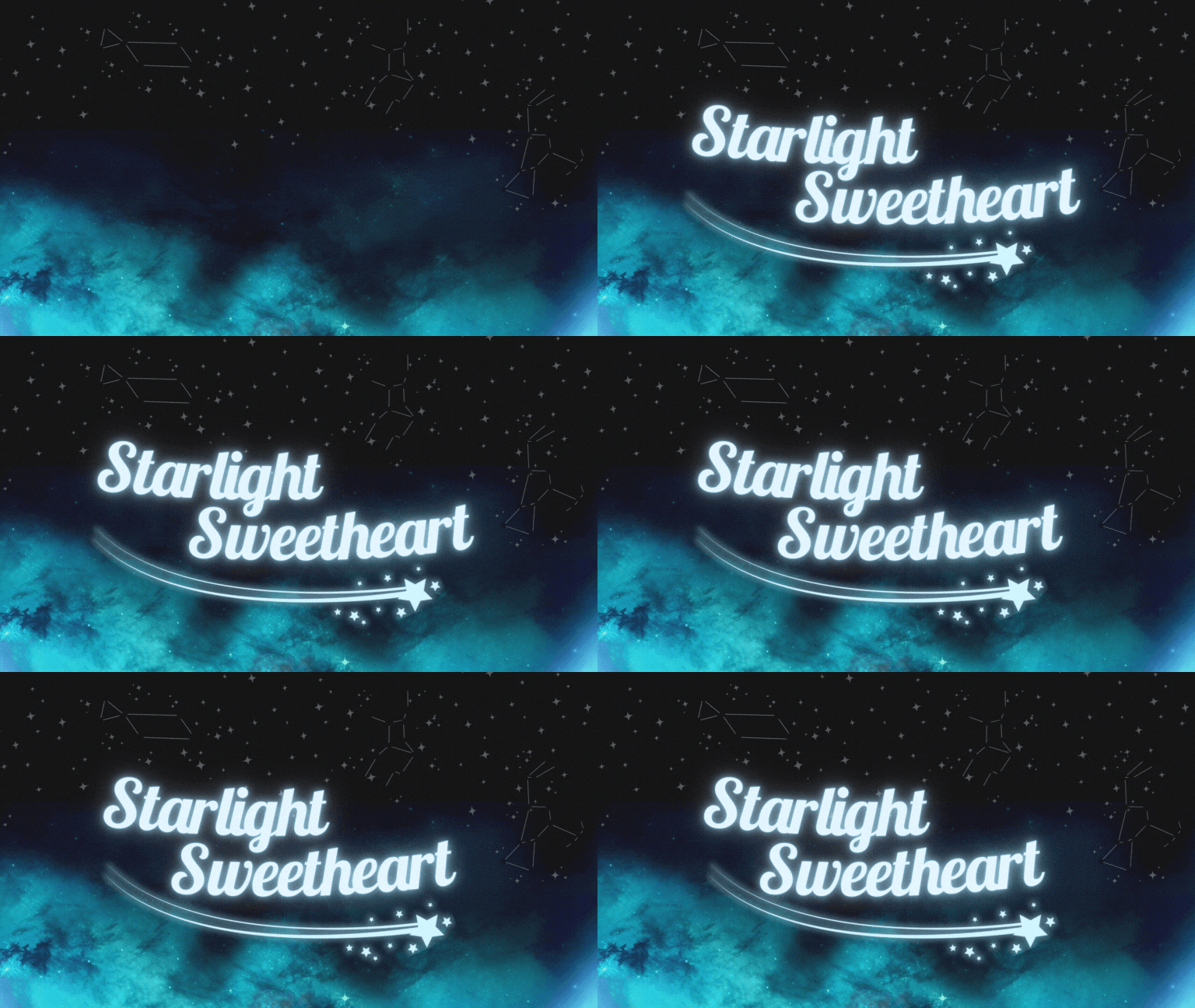
A puzzle game where you must find constellations and match them to the star chart. It takes place in one big beautiful skybox, and it has a dreamlike ambiance that I found very soothing. I didn’t know until this game, but there are corgis in space. - Storage Simulation Project
Developers: (Ali Houssni, Jake Tomassi, Jonathan Montague, John )
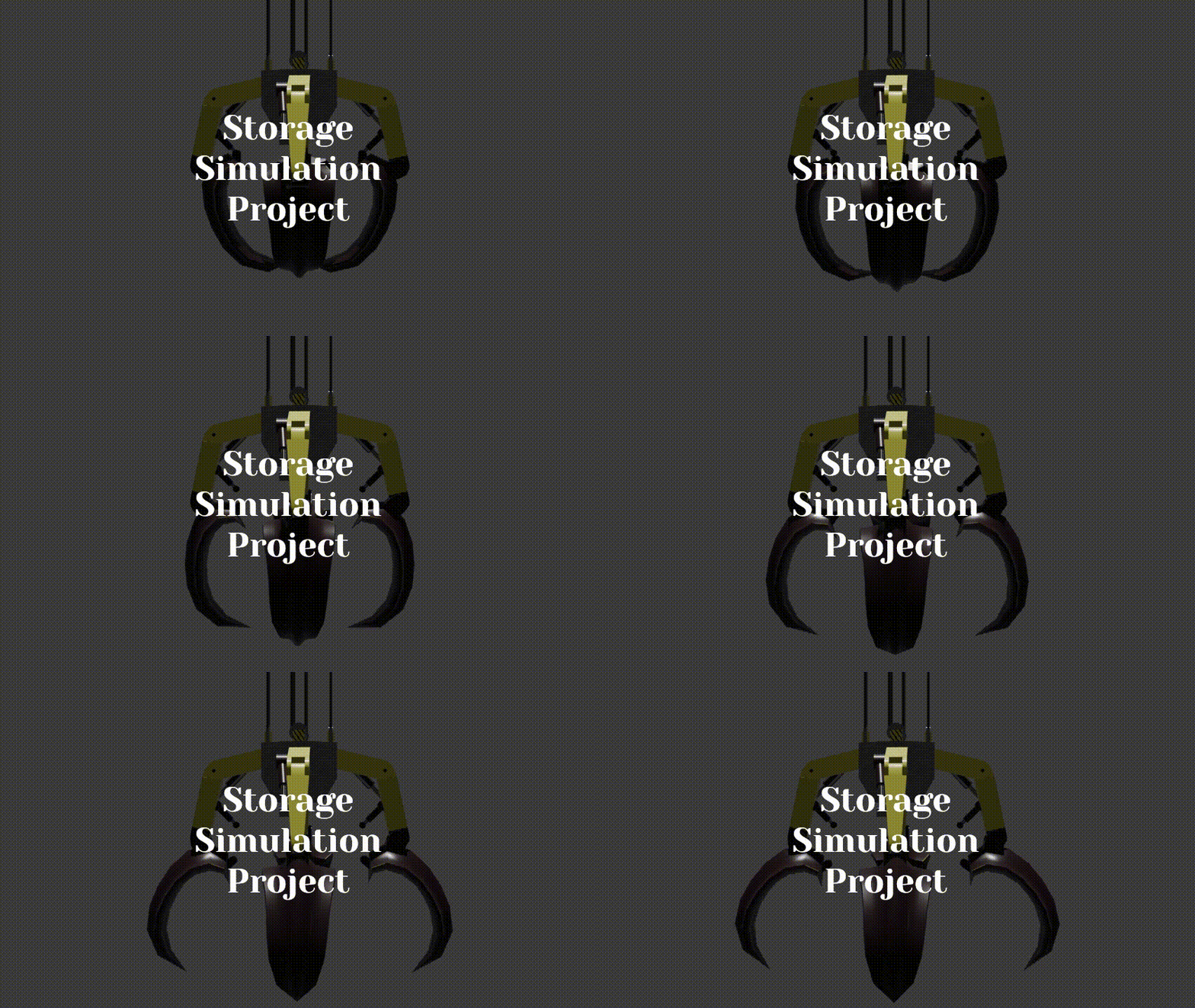
A space storage simulator where you must sort objects in a ‘space warehouse.’ Unfortunately, the game is unavailable for download. - Zero Drift
Developers: (Alejandro Pelaez, Christopher Pineyro, John Meo, Joseph Sena, Zachary Sally)
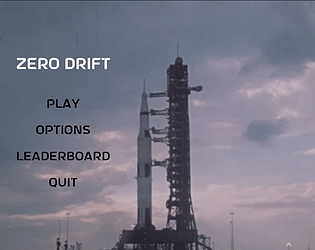
An arcade-style shooter where you must shoot objects coming toward your ship while maintaining its orientation. Personally, I’m a sucker for arcade shooters, and this one is pretty fun.
What can I honestly say about these games? Each one conveys a vast array of topics and styles: colonization, astronomy, spacecraft management, space exploration, prevention of interstellar cataclysm, and an arcade-style shooter. The variety on hand speaks volumes to life’s infinite possibilities in the stars. Granted, some are sillier than others, but that’s where gaming finds its strength. It’s not constricted to the absurd, brain-breaking metrics of real space work; no game should be. Was I expecting the next Moonbase Alpha? No, and that’s perfectly fine. And if we’re being honest, there can never be another Moonbase Alpha.
Presentations and Winners:
Judging was a tad strange this time around. The judges didn’t play the games; instead, Indienomicon decided to take a page out of Shark Tank and have the teams present their games to the judges at the table. How one can judge a game without playing it is beyond my comprehension, but that was the compromise to ensure that the event didn’t exceed completion time.
Announcing the winners…
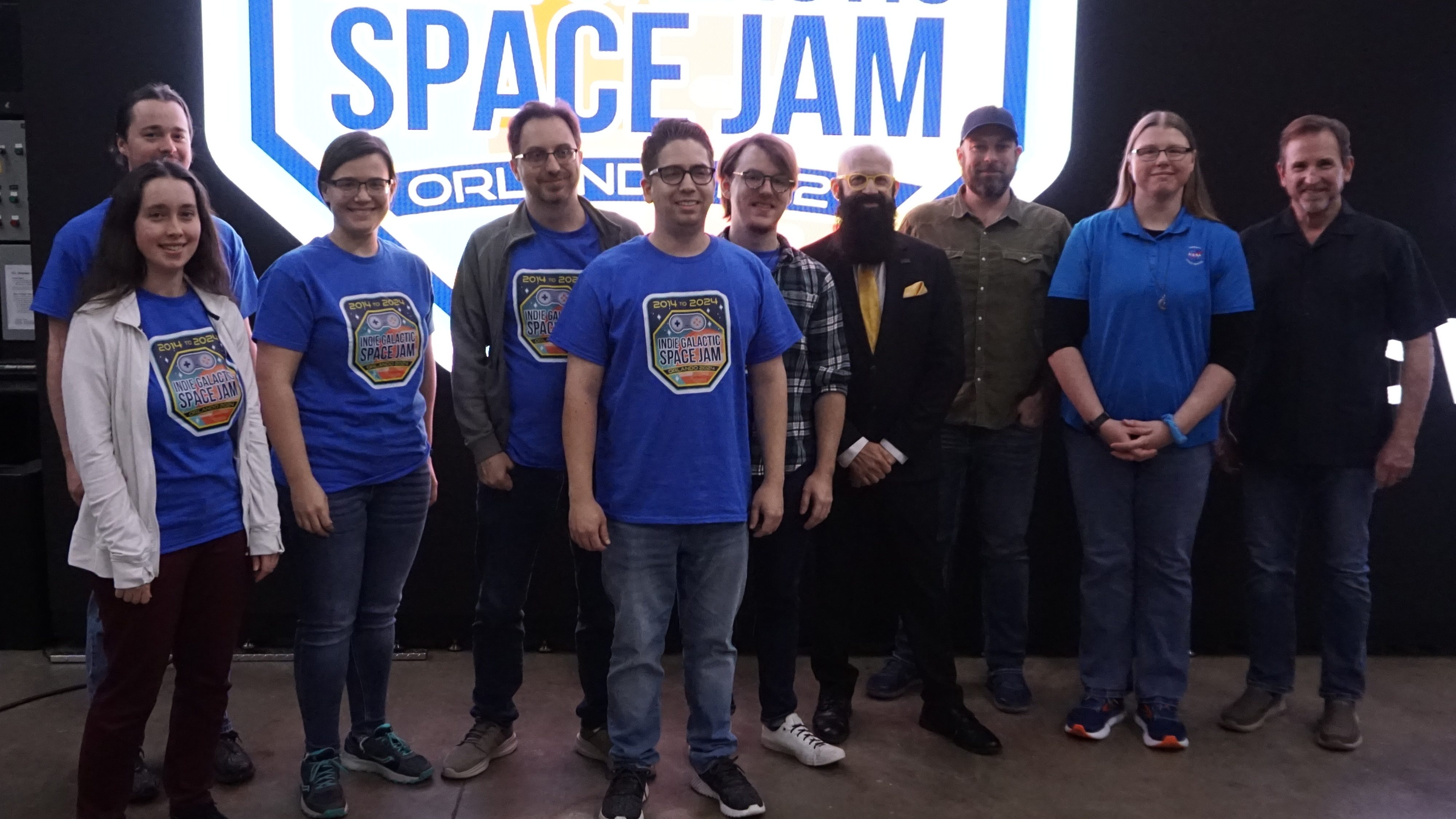
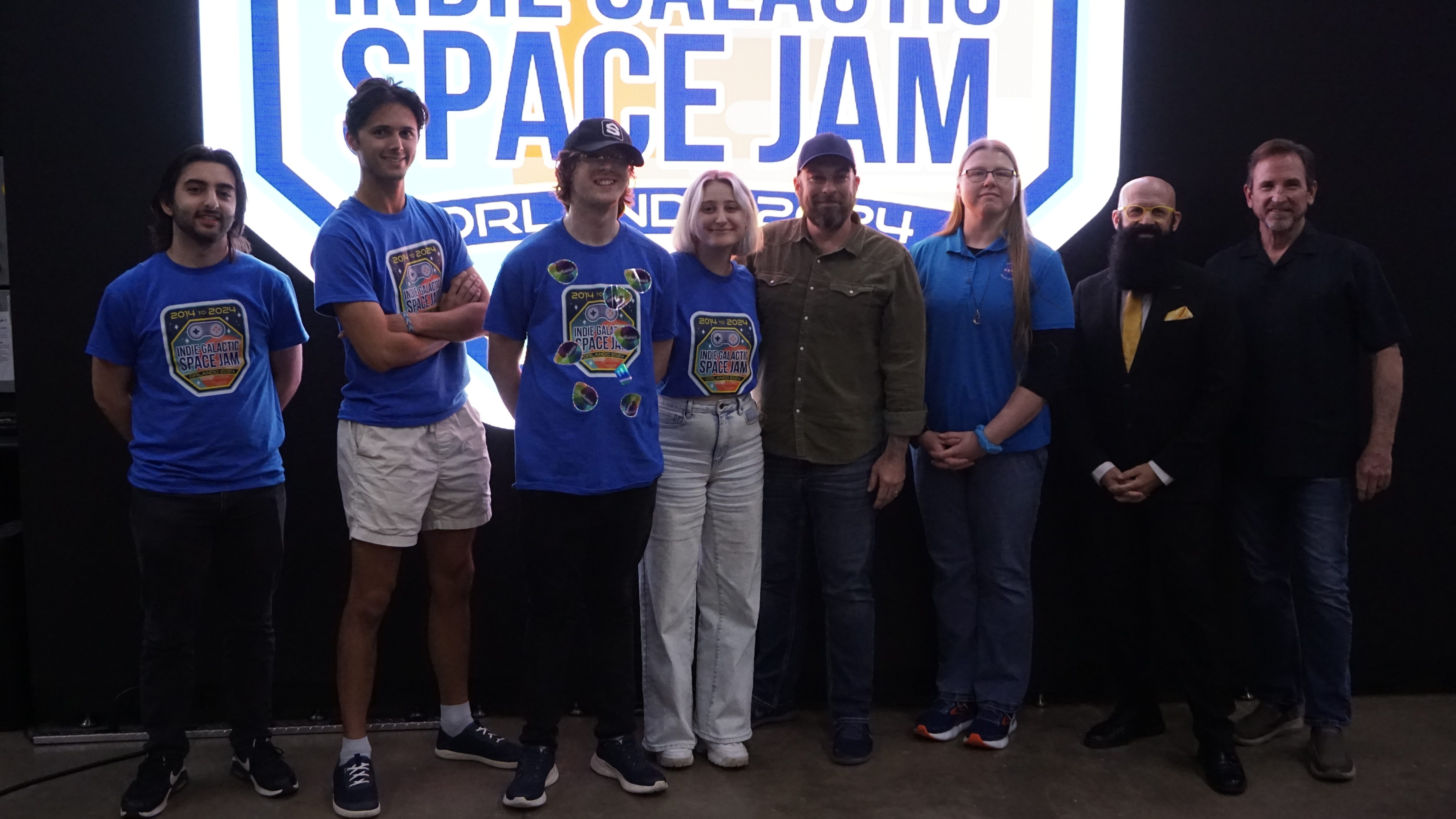
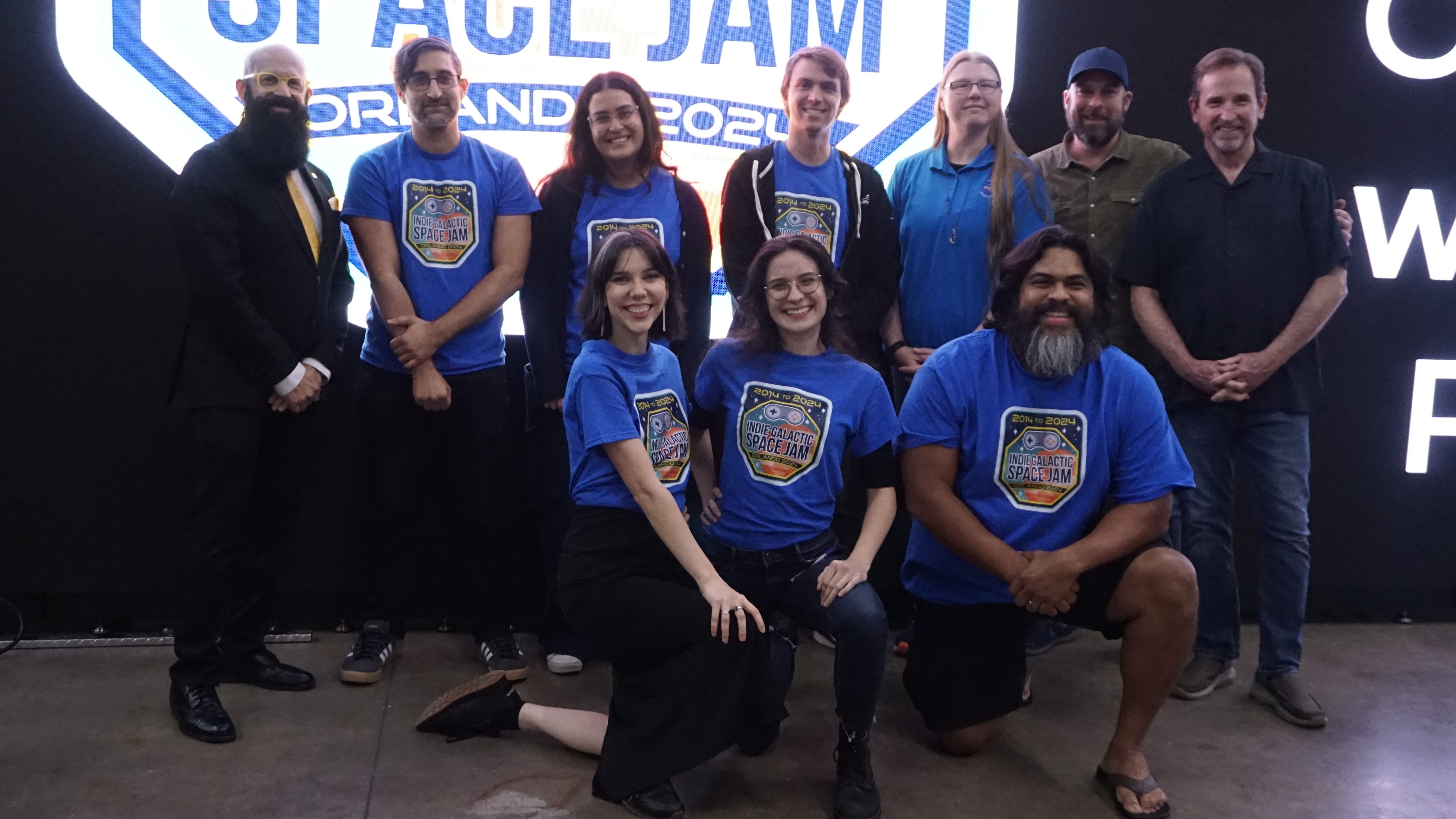
Now that’s what I call clutch! The 1st place team had some technical difficulties when showing off their game, but they managed to show enough to take the gold. My money was on Zero Drift, only because I’m a sucker for on-rail shooters.
Final Thoughts:
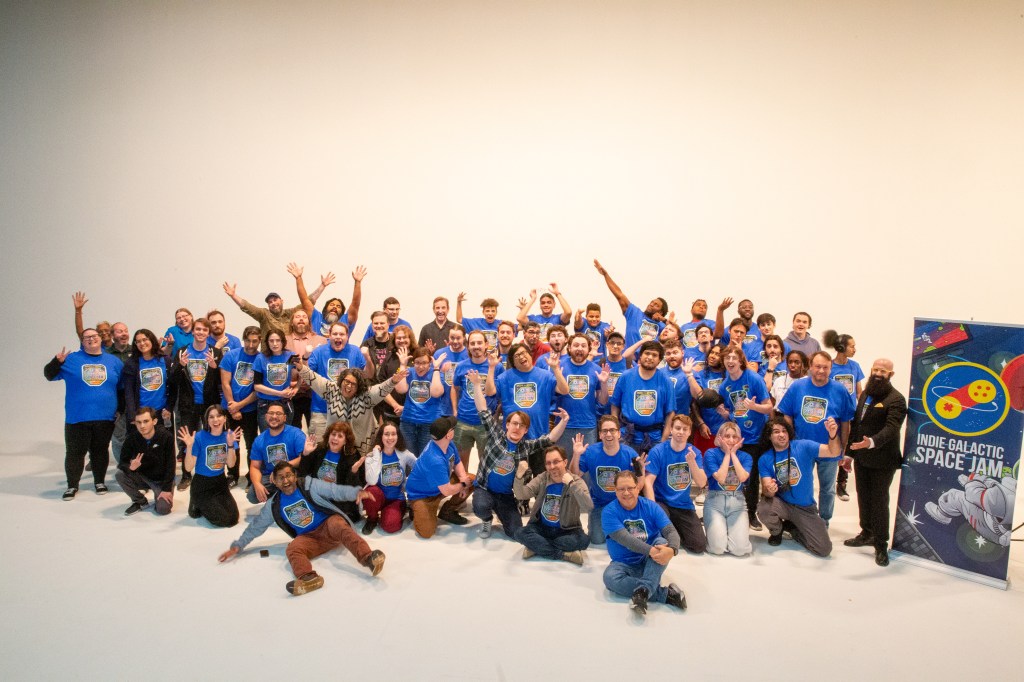
As the event ended, I wondered about the previous space jams as I looked around at this massive crowd. If you, dear reader, go back and search Indie Galactic Space Jam on Itch.io, you will see a few results. The one that stood out to me the most was the 2018 jam, which had more than 32 contestants and 22 entries. If I could use that Delorean to go back in time, I would do plenty of things, but one of them would be to go back to see how those old jams played out in person.
Even after a decade, the passion to create inspiring experiences for space hasn’t diminished in the slightest. There’s a special kind of passion that gamers and game developers have that always perseveres even under the strictest circumstances. As a gamer, I must witness and experience what that passion creates, for gaming is limitless, like the infinite expanse of stars that hangs above our heads and reveals itself in the sun’s departure. And one of my goals for the future is to become part of that passion and see what I can create from it.
 Embrace the Pixels